





 The ACLU filed suit against the government with the New York-based 2nd US Circuit Court of Appeals. Since 2008, over 6,500 people—more than 3,000 of them U.S. citizens—have been subject to warrantless border searches of computers, smartphones, and cameras, according to information obtained by the ACLU. This suit has been brought on behalf of a New York Man, 26-year-old Pascal Abidor, over the seizure of his laptop where the agency did not return the laptop for 11 days.
The lawsuit asks that the government cease and desist such activities and adhere to the guidelines laid out in the 4th Amendment of the Constitution of the United States and show probably cause for search and seizure of personal affects. A recent article on Ars Technica says,
“All we want is that the government has to have some shred of evidence they can point to that may turn up some evidence of wrongdoing,” says ACLU attorney Catherine Crump.
The so-called “border exception” to the Fourth Amendment’s probable-cause standard sometimes requires the lower standard of “reasonable suspicion” to search a traveler’s person or physical property, says Crump. But when it comes to electronic devices, the government’s “policy allows a purely suspicionless search of laptops, cell phones and other electronic devices,” she says.
The lawsuit comes as laptops, and now smart phones, (.pdf) have become virtual extensions of ourselves, housing everything from e-mail to instant-message chats to our papers and effects.
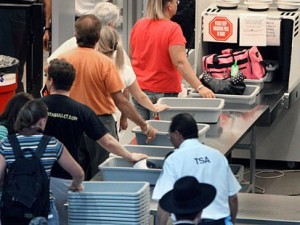 Other plaintiffs in the suit include the National Association of Criminal Defense Lawyers and the National Press Photographer’s Association, two groups who are also directly affected by this behavior as it interferes with their ability to do their jobs. Reporters transferring materials across borders that include unpopular speech should not have to fear government reprisal simply because they were selected for a suspicionless search.
Mr. Abidor, The New York man who lost possession of his laptop for over 11 days, apparently became subject to this treatment because he had politically charged images on his laptop: photographs from which included Hamas and Hezbollah rallies. When asked, he explained that he had been working on his doctoral degree involving Lebanese Shiites. This is exactly the sort of unpopular speech that is constitutionally protected and why the ACLU is filing suit. The suit argues that without probable cause to seize and intrude upon Mr. Abidor’s personal affairs the government, in the shape of Homeland Security, violated his rights. It does not ask for monetary damages, but instead will require the government to suspend these activities.
The government maintains that it retains a no-holds-barred right to check all electronic equipment crossing the border—including, but not limited to, laptops, cell phones, smart phones, and cameras. And this is what they argued in 2008 in front of he San Francisco-based 9th US Circuit Court of Appeals, which approved the searches. However, the circuit court in New York is not beholden to the rule of other circuit court precedents, so may go a different direction.
For those curious about your data-retention rights when crossing borders, the Electronic Freedom Foundation has a page dedicated to this subject: “EFF Answers Your Questions About Border Searches”.
… We’d like to tell you about our mission and how you can help us fulfill it. SiliconANGLE Media Inc.’s business model is based on the intrinsic value of the content, not advertising. Unlike many online publications, we don’t have a paywall or run banner advertising, because we want to keep our journalism open, without influence or the need to chase traffic.The journalism, reporting and commentary on SiliconANGLE — along with live, unscripted video from our Silicon Valley studio and globe-trotting video teams at theCUBE — take a lot of hard work, time and money. Keeping the quality high requires the support of sponsors who are aligned with our vision of ad-free journalism content.
If you like the reporting, video interviews and other ad-free content here, please take a moment to check out a sample of the video content supported by our sponsors, tweet your support, and keep coming back to SiliconANGLE.






