





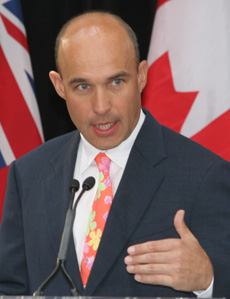
 Oracle shares are increasing, but RIM’s earnings call this week wasn’t quite as impressive. After being asked by RBC analyst Mike Abramsky, RIM co-CEO Jim Balsillie goes on explaining, for several minutes, about how Blackberry will survive the market.
It’s competing with the likes of Apple and Android, which have been defeating Blackberry in design and high-end phone specifications. Business Insider reports,
“I think in terms of what BlackBerry does, you know, it still has a tremendous number of attributes that really serve the market in the way that we align it for the service and for the carrier and for the segment that it’s supposed to address. And I think it’s dangerous to frame all this in a high-end arms race. And I think you’re going to see our capacity to go beyond what could have been expected by anyone and yet still address the issues of cost effectiveness, security, efficiency, and desired form factors.”
Though RIM is a global smartphone leader, BlackBerry is apparently behind Apple and Android, thus, suffering from a great deal of scrutiny. BlackBerry seems to be targeting the low-end market, and taking time to advance “because if you make these things so high-end that they’re not addressable to the market, or they’re so consumptive of the networks they can’t scale, that’s not what we originally designed our business for,” Balsillie added.
Blackberry users occupy a huge segment of the mobile phone user population and their low-end market targeting would mean a decline in the advancement of smartphones. But RIM has been plotting several changes in business strategy and new products lines are introduced to maintain dominance. Let’s find out more at the DevCon happening later this month. Also, the features of Blackberry Torch and BB6 is something many analysts will be eying as they spread into the market.
… We’d like to tell you about our mission and how you can help us fulfill it. SiliconANGLE Media Inc.’s business model is based on the intrinsic value of the content, not advertising. Unlike many online publications, we don’t have a paywall or run banner advertising, because we want to keep our journalism open, without influence or the need to chase traffic.The journalism, reporting and commentary on SiliconANGLE — along with live, unscripted video from our Silicon Valley studio and globe-trotting video teams at theCUBE — take a lot of hard work, time and money. Keeping the quality high requires the support of sponsors who are aligned with our vision of ad-free journalism content.
If you like the reporting, video interviews and other ad-free content here, please take a moment to check out a sample of the video content supported by our sponsors, tweet your support, and keep coming back to SiliconANGLE.






