





We’ve all been told that “Net Neutrality” is about “preserving” the Internet as it is, but those of us who have followed the issue closely know that this was never the intent. Now that the FCC is set to vote on Net Neutrality regulations this week, the “real” Net Neutrality hardliners are all out in full force and they’re no longer hiding their true intentions. It was no accident that “Net Neutrality” was never specifically defined because it was always meant to be a catch-all slogan to justify regulating everything on the Internet.
If it’s a peering dispute between a Content Distribution Network (CDN) and Broadband provider, “real” Net Neutrality hardliners want that regulated and the intimidating calls from the FCC followed.
If a friend’s wireless app gets rejected on the iPhone, that will be regulated through intimidating letters. John Borthwick just wrote this editorial for TechCrunch pleading for apps to be part of the definition of “application-agnostic” network management.
If it’s some modem maker in China angry about having to pay for hardware certification, just file that under Net Neutrality.
The clear trend here is that if you have a gripe on anything Internet related, Net Neutrality is your ticket to regulate it.
Two years ago when many of us including myself that Content Delivery Networks (CDNs) were essentially the type of prioritized network that Net Neutrality would outlaw, the proponents of Net Neutrality avoided that inconvenient debate by defending CDNs and continued to do so until recently. Net Neutrality proponents defended CDNs (and their ally Google) by calling them “geographic optimization” or “edge caching” and claimed that they were different from prioritized “fast lanes”.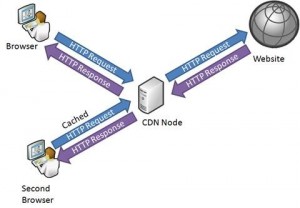
Now that the “real” Net Neutrality proponents are lashing out against Comcast on the Level 3 versus Comcast dispute and Google is a bit less endearing to them, Todd Spangler noted that CDNs are the next obvious target of the real Net Neutrality movement which seeks a complete ban on paid peering. How can CDNs not be a target when hardliner Net Neutrality proponents envision an Internet where everyone has the same capability to deliver content and applications? CDNs by definition are a paid service that affords better capability to those who can pay and it is the epitome of everything that the Internet egalitarian movement hates.
Furthermore, the argument that CDNs are merely geographic optimization and not prioritization is wrong. CDNs do in fact grant very good bandwidth prioritization characteristics at the expense of other content and applications because its lower latency grants more resilience against the Internet’s congestion control mechanism. Since the Internet’s congestion control mechanism tells computers to only speed up when they get confirmation of packet delivery, lower latency content can increase their bandwidth faster because they get quicker packet delivery confirmation.
As the Level 3 versus Comcast peering dispute revealed, CDNs pay broadband providers like Comcast for hundreds of Gigabits per second of private peering capacity (see video). CDNs are the very definition of paid peering and real Net Neutrality proponents want this crucial part of the Internet’s modern architecture and economy outlawed. If that breaks every popular video service on the Internet, that shouldn’t bother Net Neutrality proponents because they still live under the delusion that everything is non differentiated on the Internet.
I spent a little time debating CDNs, fast lanes, and wireless Net Neutrality with NPR’s Laura Sydell last week (will likely be broadcast this week). When debating wireless Net Neutrality, Sydell responded to me that the Kindle model with limited web access should be outlawed. The app store apparently bothered her too despite the fact that she was sporting one of the latest Android smartphones. As for cheaper single-device wireless plans with no tethering support, those should be outlawed too. We didn’t get into usage caps, but most of the Net Neutrality proponents want that regulated too. And by “regulated”, they mean outlaw any service plan they don’t like. If it means no more cheap non-tethering data plans or low-cap plans, too bad.
It doesn’t matter if 70% of wireless users can cut their wireless service costs in half without changing their existing usage patterns, usage caps should be outlawed under “real Net Neutrality”. It doesn’t matter if Kindle 3G access is free, that walled garden model should be outlawed. I argued that the consumer should be the one to decide which service model they want, but Sydell argued that the benefits outweigh the downsides of government regulation. Defenders of real Net Neutrality – in their own minds – just know better than consumers since consumers are generally uninformed and too easily swayed by upfront savings to know what’s good for them in the long term. Therefore, the government should step in and make the correct choice for consumers and the wireless industry.
The problem with this philosophy is that it eliminates freedom in the name of “open networks”. It forces the masses who don’t need every feature under the sun to subsidize the power users while raising the bar against lower income adoption. It needlessly suffocates a very competitive wireless carrier and device ecosystem with heavy-handed regulations.
[Cross-posted at Digital Society]
… We’d like to tell you about our mission and how you can help us fulfill it. SiliconANGLE Media Inc.’s business model is based on the intrinsic value of the content, not advertising. Unlike many online publications, we don’t have a paywall or run banner advertising, because we want to keep our journalism open, without influence or the need to chase traffic.The journalism, reporting and commentary on SiliconANGLE — along with live, unscripted video from our Silicon Valley studio and globe-trotting video teams at theCUBE — take a lot of hard work, time and money. Keeping the quality high requires the support of sponsors who are aligned with our vision of ad-free journalism content.
If you like the reporting, video interviews and other ad-free content here, please take a moment to check out a sample of the video content supported by our sponsors, tweet your support, and keep coming back to SiliconANGLE.






