







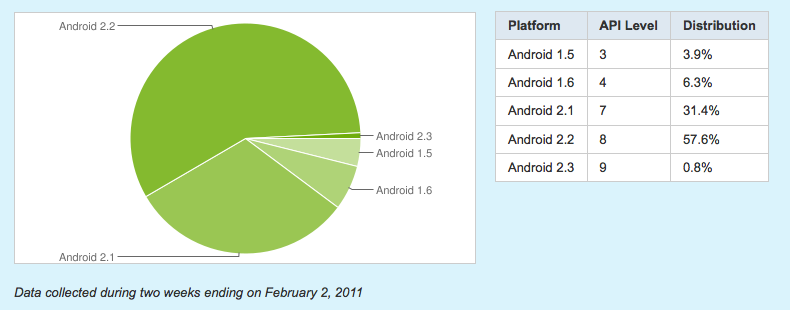
 Google has just released some numbers for their Android Operating System that helps understand the device distribution landscape as well as to decide the development of apps features for these devices. Here are some of the major numbers as given by Google:
These numbers offer both clarity and insight to Android’s OS distribution, which can seem like a dog and pony show at times. The disparate presence of its fragmented operating system has caused some negative sentiment around Google’s plans for solidifying Android as a platform, though recent updates to the system always bring promises of improvements and cohesiveness. Sound like another company you know?
Lately, Google has been making several announcements including rolling out of Android web store that was launched earlier this week along with the Honeycomb (Android 3.0). With the launch of this new Android web store, users will be able to send applications on their Android devices without any wires also share them and their reviews on Twitter. It has added several upgraded features like in-app payment support in the store, which is quite significant.
Although Android is undergoing several developments, it is expected that Android web store can open back doors for several phone hackers too. How? It’s because the web store requires the user to sign in with his standard Google account and the application will fetch the details of device registered in their name. Once the user is logged in, app installs are available with a single click of a button. Security concerns come into play when an application asks for unusual permissions during installation. Of course, Android store displays required permissions for user security, once the install button is pressed, mobile device automatically starts downloading the application in the background due to INSTALL_ASSET discovered Jon Oberheide to remotely remove a test Trojan application created by the researcher.
So, the bottom line is that if some manages to steal your Google password, they can trick your smartphone using a software and steal further important data. This makes your Google account password extremely sensitive and vulnerable to phishing attacks as well as malware attacks on the device itself. However, what you can do here is to create a strong but easy to remember password for your Google account to prevent any fraudulent incidents from happening.
Support our mission to keep content open and free by engaging with theCUBE community. Join theCUBE’s Alumni Trust Network, where technology leaders connect, share intelligence and create opportunities.
Founded by tech visionaries John Furrier and Dave Vellante, SiliconANGLE Media has built a dynamic ecosystem of industry-leading digital media brands that reach 15+ million elite tech professionals. Our new proprietary theCUBE AI Video Cloud is breaking ground in audience interaction, leveraging theCUBEai.com neural network to help technology companies make data-driven decisions and stay at the forefront of industry conversations.




