




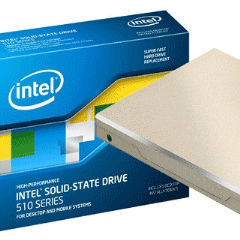
 Looking to bring to market the fastest solid state drive, Intel is coming to town with the current fastest SATA SSD, but they’re still not the shiniest vendor in the bazaar. Bought in bulk, the 250GB SSD 510 will cost a bout $584, whereas the slightly slower and smaller version (450MBps read) 120GB model will run around $254.
Highlights:
“This is a positive step for the SATA SSD form factor, but it’s still a 50/50 proposition,” says SiliconANGLE’s Art Lindsey.
“The 120gb offering is on par in terms of speed and price when compared to say, OCZ’s PCI-E SSD cards of the same capacity. However, for around the same price, OCZ’s 240GB PCI-E SSD cards blow Intel’s new 250GB SATA SSD out of the water, with a top transfer speed of 720MBps. So, it’s all in how one decides to weigh his or her individual needs. The one edge Intel may be able to point to is that of better compatibility over PCI-E alternatives, because not all motherboards can boot to PCI-E.
“As they say in the betting world, it’s a ‘Pick ’em’.”
This sort of development will lead towards faster and slimmer laptops and tablets, especially for gamers—that is, people willing to shell out a lot of extra cash for a performance boost. However, to the regular Jane-Q-Farmville on the street, this won’t be that enticing as the prices are still a little bit out of reach. As a gamer
Something this sort of speed boost may close the gap, as Art mentions, between SATA and PCI-E SSDs for high speed and high bandwidth storage. No doubt, these sorts of trends in storage mechanics—especially if Intel can make them cheaper—will begin to deliver and guide cloud storage and computing development.
For example, companies like Fusion-io have made significant use of SSD technology for cloud applications and in the video below Frank McBath explains the difference between PCI-E SSD (discussed by Art) and SATA SSD (such as the Intel SSD 510.)
… We’d like to tell you about our mission and how you can help us fulfill it. SiliconANGLE Media Inc.’s business model is based on the intrinsic value of the content, not advertising. Unlike many online publications, we don’t have a paywall or run banner advertising, because we want to keep our journalism open, without influence or the need to chase traffic.The journalism, reporting and commentary on SiliconANGLE — along with live, unscripted video from our Silicon Valley studio and globe-trotting video teams at theCUBE — take a lot of hard work, time and money. Keeping the quality high requires the support of sponsors who are aligned with our vision of ad-free journalism content.
If you like the reporting, video interviews and other ad-free content here, please take a moment to check out a sample of the video content supported by our sponsors, tweet your support, and keep coming back to SiliconANGLE.






