







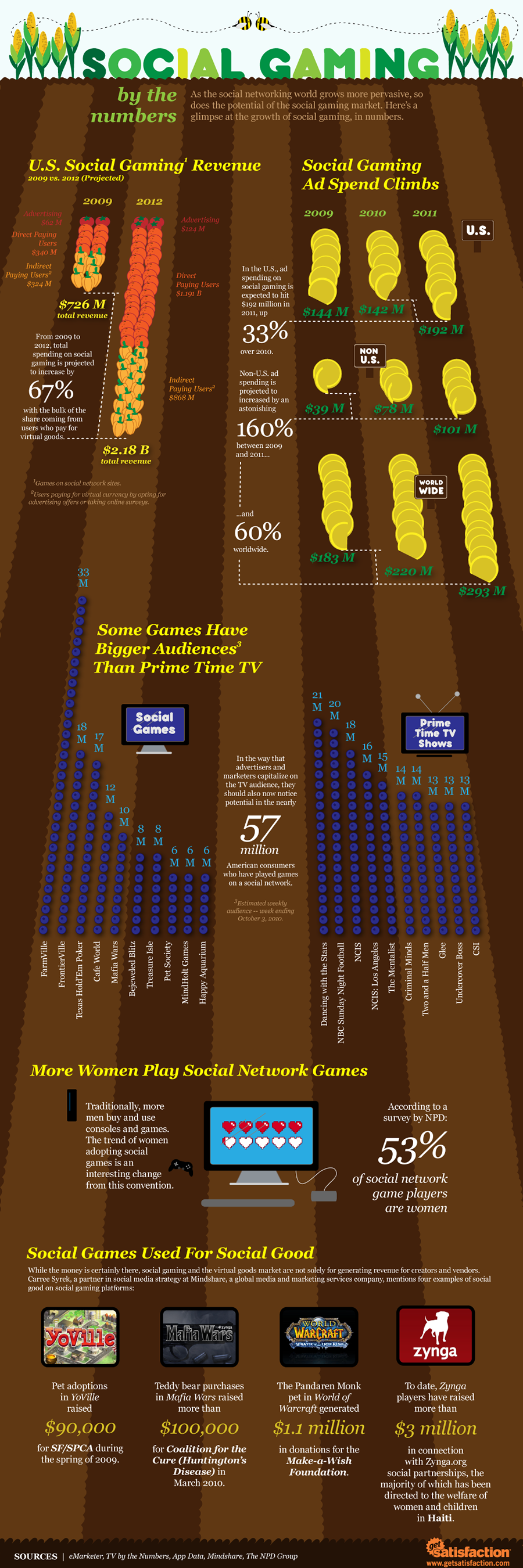
 Social gaming spins good money, and the potential is only growing, as virtual app developers find more ways to monetize intangible goods. According to the chart below, US social gaming revenues went as high as $726 million in 2009, and by 2012 the numbers are expected to increase by another 67 percent. Social gaming is also gaining increasing popularity, having overtaken prime time TV shows in terms of “ratings,” with FarmVille, FrontierVille and Texas Hold’Em Poker gathering the largest numbers of players.
Social responibility has a significant role in this play as the SPCA received $90,000 from virtual pet adoptions in YoVille, buyers of virtual teddy bears in Mafia Wars redirected $100,000 to the Coalition for the Cure (Huntington’s Disease) and for all Pandaren Monk pets generated in WoW, the Make-A-Wish Foundation received $1.1 million.
Although the chart provides us with data gathered from the US market, the success of social gaming in Asia is record-breaking, the highest revenues coming from the sale of virtual gifts. mig33 revealed that its members purchased more than 40 million virtual gifts in 2010. Among the 10 top purchasing countries, three – Nepal, Tanzania, and Bangladesh – grew by well over 200 percent, and three others – India, Pakistan and Iraq – more than doubled. Indonesia accounted for about half of mig33’s virtual goods sales in 2010, and enjoyed successive quarters of growth.
More and more companies see an immense opportunity in virtual goods returning high revenues and look for strategic partnerships such as the one between Stardoll and Mattel. Earlier this week we saw latest deal in social gaming take place between Mentez and Zynga, bringing virtual goods and currencies over Latin America through digital card games.
Support our mission to keep content open and free by engaging with theCUBE community. Join theCUBE’s Alumni Trust Network, where technology leaders connect, share intelligence and create opportunities.
Founded by tech visionaries John Furrier and Dave Vellante, SiliconANGLE Media has built a dynamic ecosystem of industry-leading digital media brands that reach 15+ million elite tech professionals. Our new proprietary theCUBE AI Video Cloud is breaking ground in audience interaction, leveraging theCUBEai.com neural network to help technology companies make data-driven decisions and stay at the forefront of industry conversations.




