







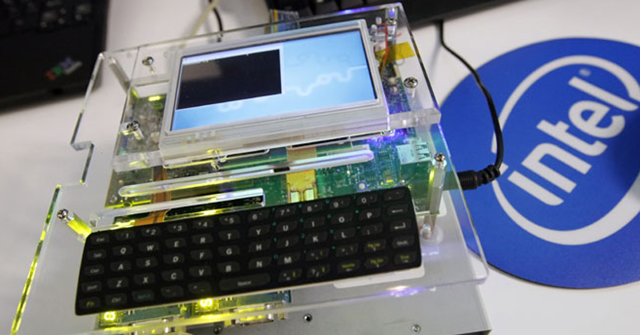
 Intel today announced a new Atom processor with lower platform power use with support for high performance graphics targeted at smartphone and tablet use.
The latest Atom Z6xx is designed to compete against ARM Holdings, the UK chip design company. ARM-based chips dominate the smartphone market, Apple chose an ARM-based design to power its iPad and iPhone products.
Here are the details on the latest Atom from Intel:
>50x reduction in idle power, >20x reduction in audio power, and 2-3x reductions across browsing and video scenarios – all at the platform level when compared to Intel’s previous-generation product.
These power savings translate into >10 days of standby, up to 2 days of audio playback and 4-5 hours of browsing and video battery life3. When combined with 1.5-3x higher compute performance, 2-4x richer graphics, >4x higher JavaScript performance, and support for full HD 1080p high-profile video decoding and 720p HD video recording. 3-D graphics, multi-point videoconferencing and voice.
Intel Atom Processor Z6xx based on Intel’s 45nm2 low-power process, packs 140 million transistors… also includes a Controller Hub (MP20) and a dedicated Mixed Signal IC.
Intel developed a new 45nm chip process manufacturing technology to make it easier to integrate different blocks of technology in order to produce semi-custom versions for different applications.
ARM licenses its designs widely and there are large libraries of technology modules that allow customers to customize their chips, Intel does not offer a similar capability. However, Anand Chandrasekher, senior vice president and general manager of Intel Corporation’s Ultra Mobility Group, told SVW that Intel would consider making a custom version if the economics of the deal made sense.
Mr Chandrasekher did not discuss customers for the new Atom but said it wasn’t because there were no customers but that they were secretive about their product plans for competitive reasons.
Intel has an agreement with TSMC, the world’s largest chip foundry, to produce custom chips using Atom but that relationship has not produced any parts and is on hiatus. Mr Chandrasekher said that the relationship remains "active" but that customers wanted Intel to produce the chips.
Intel’s latest 45nm technology makes its process more compatible with the 45nm process used by TSMC. (EETimes.com – Source: Samsung explores gate-last high-k)
Intel needs some high profile customer wins in the smartphone market. One way to help achieve that would be to extend its "Intel Inside" marketing program to smartphones. This brings millions of dollars to each vendor to subsidize marketing costs and it plays a large role in the PC market.
[Editor’s Note: Tom cross-posted this on Silicon Valley Watcher. In the interests of disclosure, please note that Intel is a past sponsor of Tom’s, and Tom is presently a member of the “Intel Insider” advisory group. –mrh]
Support our mission to keep content open and free by engaging with theCUBE community. Join theCUBE’s Alumni Trust Network, where technology leaders connect, share intelligence and create opportunities.
Founded by tech visionaries John Furrier and Dave Vellante, SiliconANGLE Media has built a dynamic ecosystem of industry-leading digital media brands that reach 15+ million elite tech professionals. Our new proprietary theCUBE AI Video Cloud is breaking ground in audience interaction, leveraging theCUBEai.com neural network to help technology companies make data-driven decisions and stay at the forefront of industry conversations.




