



 NEWS
NEWS
NEWS
NEWS
NEWS

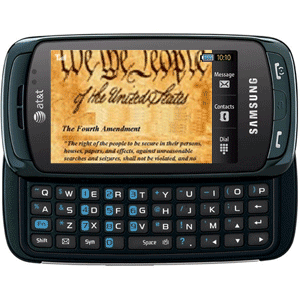 Gov. Jerry Brown of California has vetoed a bill that would have required police officers to obtain a warrant before searching arrestees’ smartphones. The bill would have worked to prevent the practice of law enforcement of opening up a person’s cell phone, downloading all the contents, perusing photos, videos, texts, e-mails, and other private effects without a court order.
Apparently, we at SiliconANGLE had been a little bit too hasty in thinking this was a win for smartphone user privacy rights in California when the state legislature passed SB 914 with the Assembly approving the bill 70-0 and the Senate, 32-4. Of course, before a bill can properly become a law the governor must sign it into law; the lack of his signature merits a veto, which blocks its ratification.
“The courts are better suited to resolve the complex and case-specific issues relating to constitutional search-and-seizure protections,” the governor wrote, referring to the decision of the U.S. Supreme Court not to hear a case by California’s Supreme Court on the very same issue. Precisely what the new California law had intended to shore up for its citizens.
Our smartphones have become more than just digital pockets that store notes and knickknacks that we can dump onto a table at the request of a police officer. Smartphones are increasingly becoming portals into a vast timeline of our lives—in fact, some smartphones even become windows into our individual personal cloud and give direct access to private information that would otherwise require a warrant to search (i.e. things stored on personal computers or behind private Facebook locks.)
Smartphone users may need to look at the sort of protections provided by their phones to their personal information when they use them. Full-device encryption isn’t offered my many manufacturers—although it can be built-on for devices that run Android, but not any iOS device yet—and for many situations the personal cloud looks like an excellent alternative. Using the personal cloud (along with tight encryption and a password) to store the contents of a phone could make it much more difficult for anyone usurping control of a smartphone to obtain its information—this includes criminals as well as government authorities.
All of this is extremely concerning because smartphones have become like a second pair of eyes and ears. They record a lot of our communication and store it on themselves where it becomes open to anyone who can break the physical security on the phone itself. In Michigan, police have already experimented with devices that can clone the Flash memory on smartphones (bypassing physical layer security altogether) and thereby retrieve the call list, all texts, photos, movies, e-mails, and even GPS memory.
Having just gone through a series of articles concerning smartphones tracking users it’s obvious that smartphones are more private than currently treated by the law.
… We’d like to tell you about our mission and how you can help us fulfill it. SiliconANGLE Media Inc.’s business model is based on the intrinsic value of the content, not advertising. Unlike many online publications, we don’t have a paywall or run banner advertising, because we want to keep our journalism open, without influence or the need to chase traffic.The journalism, reporting and commentary on SiliconANGLE — along with live, unscripted video from our Silicon Valley studio and globe-trotting video teams at theCUBE — take a lot of hard work, time and money. Keeping the quality high requires the support of sponsors who are aligned with our vision of ad-free journalism content.
If you like the reporting, video interviews and other ad-free content here, please take a moment to check out a sample of the video content supported by our sponsors, tweet your support, and keep coming back to SiliconANGLE.






