StackOverflow is a question and answer community for programmers. Users can ask questions and then vote on the best answers. Back in 2009, someone asked: “What is the single most influential book every programmer should read?” The result is a crowdsourced list of the best books on programming in general, rather than a list of books about particular programming languages (for the most part).
The books with the most votes are:
- Code Complete (2nd Ed) by Steve McConnell.
- The Pragmatic Programmer by Andrew Hunt and David Thomas.
- Structure and Interpretation of Computer Programs by Harold Abelson, Gerald Jay Sussman and Julie Sussman.
- The C Programming Language by Brian W. Kernighan and Dennis M. Ritchie.
- Introduction to Algorithms by Thomas H. Cormen, Charles E. Leiserson, Ronald L. Rivest and Clifford Stein.
- Refactoring: Improving the Design of Existing Code by Martin Fowler, Kent Beck, John Brant, William Opdyke and Don Roberts.
- Design Patterns by Erich Gamma, Richard Helm, Ralph Johnson and John Vlissides.
- The Mythical Man-Month by Fredrick P. Brooks, Jr.
- The Art of Computer Programming by Donald E. Knuth.
- Compilers: Principles, Techniques, and Tools by Alfred V. Aho, Monica S. Lam, Ravi Sethi and Jeffrey D. Ullman.
There were a couple of books not directly related to programming that received a large number of upvotes: Zen and the Art of Motorcycle Maintainance, Robert Pirsig’s classic meditation on quality, and Gödel, Escher, Bach, Douglas Hofstadter’s epic study of recursion.
For another classic read on self-education for programmers check out Peter Norvig’s Teach Yourself Programming in Ten Years.
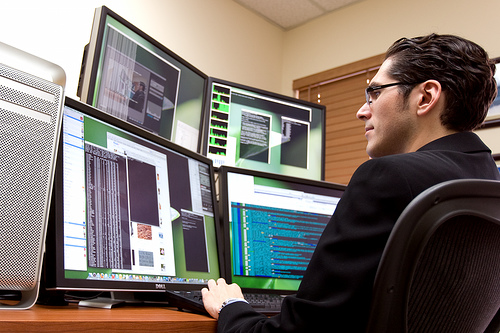
Photo by totalAldo
A message from John Furrier, co-founder of SiliconANGLE:
Support our mission to keep content open and free by engaging with theCUBE community. Join theCUBE’s Alumni Trust Network, where technology leaders connect, share intelligence and create opportunities.
- 15M+ viewers of theCUBE videos, powering conversations across AI, cloud, cybersecurity and more
- 11.4k+ theCUBE alumni — Connect with more than 11,400 tech and business leaders shaping the future through a unique trusted-based network.
Are you AWS customer? Support SiliconANGLE Financially by buying your AWS services from our Marketplace portal page and links.
About SiliconANGLE Media
SiliconANGLE Media is a recognized leader in digital media innovation, uniting breakthrough technology, strategic insights and real-time audience engagement. As the parent company of
SiliconANGLE,
theCUBE Network,
theCUBE Research,
CUBE365,
theCUBE AI and theCUBE SuperStudios — with flagship locations in Silicon Valley and the New York Stock Exchange — SiliconANGLE Media operates at the intersection of media, technology and AI.
Founded by tech visionaries John Furrier and Dave Vellante, SiliconANGLE Media has built a dynamic ecosystem of industry-leading digital media brands that reach 15+ million elite tech professionals. Our new proprietary theCUBE AI Video Cloud is breaking ground in audience interaction, leveraging theCUBEai.com neural network to help technology companies make data-driven decisions and stay at the forefront of industry conversations.