





 2011 saw some significant mobile developments from Facebook. When it comes to people, 2011 was the year that Facebook claimed 800 million active users around the world, and with mobile promising to be a key area in the coming year, we look at a few mobile highlights from Facebook as the year comes to an end.
Facebook API with HTML5 for Mobile Apps
In early October Facebook made a first step in the direction of mobile apps using HTML5 standards. Codenamed Project Spartan, Facebook came out with an app not only for the web, but also for smartphones and tablets for both iOS and Android systems. The recently introduced HTML5 platform for mobile gaming allows great flexibility to developers and a strong integration for games within Facebook’s expansive ecosystem.
You can develop native applications with each SDK using Facebook’s API, or you can put one application in the mobile realm using HTML5 Phone Gap framework that can help create an application for iOS and Android app stores.
Facebook for iPad, iPhone
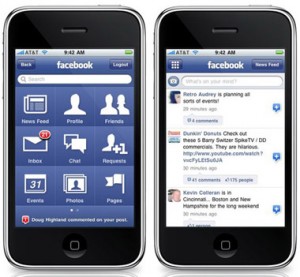
Designed for both iPhone and iPad at the time of launch, Facebook for iPad was crowned as a top app for consumers and business tablet users alike. Facebook for iPhone lets you discover the best of the Facebook, including high-resolution photos, games, chat, browse, search and more.
Facebook Messenger
Check out some ways to use Facebook in the year-end holidays. Download Facebook Messenger and then you can stay in touch with your family wherever they are. If you have an iPhone, Android or Blackberry, look in your Messenger for Facebook application store.
Facebook Messenger, launched in August this year after Facebook acquired group messaging app Beluga last March, lets you send a text message directly on your friend’s phone if their number is listed in their Facebook page. It also features a video chat mobile option, which allows real-time communication within Facebook at a private level.
 Facebook Buffy
After months of rumors and denials, reports surfaced the social network created by Mark Zuckerberg was working on a mobile phone designed specifically by and for Facebook, codename Buffy – a name derived from the series of vampire hunter – and the device will be manufactured by HTC.
The so-called “Facebook phone” has been the focus of a major speculation for more than two years. The phone seems to be created based on a modified version of Android, and Facebook could also implement the support for the HTML5-based platform for managing applications that introduced a few months ago.
The question is, why is Facebook investing time and money in developing a mobile phone? The answer is simple: 44% of the 800 million Facebook users access the network from a mobile phone. That comes out to 33% of traffic generated by the social network as being derived from mobile phones.
Facebook Platform for Mobile
Facebook Platform for Mobile is designed for developers to take advantage of social channels for app discovery as well as the Facebook Credits payment system. In October the company extended the mobile platform beyond its own mobile website to iOS apps and mobile sites, allowing developers to reach the 350 million users that access the social media site via these channels every month.
To lure mobile developers to create more Facebook apps, the network held a Mobile Hack Event in Palo Alto two months ago. The event was a clear success, and to continue the enthusiasm, Facebook will be conducting two more Mobile Hack events next month in New York and Boston.
… We’d like to tell you about our mission and how you can help us fulfill it. SiliconANGLE Media Inc.’s business model is based on the intrinsic value of the content, not advertising. Unlike many online publications, we don’t have a paywall or run banner advertising, because we want to keep our journalism open, without influence or the need to chase traffic.The journalism, reporting and commentary on SiliconANGLE — along with live, unscripted video from our Silicon Valley studio and globe-trotting video teams at theCUBE — take a lot of hard work, time and money. Keeping the quality high requires the support of sponsors who are aligned with our vision of ad-free journalism content.
If you like the reporting, video interviews and other ad-free content here, please take a moment to check out a sample of the video content supported by our sponsors, tweet your support, and keep coming back to SiliconANGLE.






