





 Today’s mobile roundup features the new iPad’s charging issue, Verizon defending their spectrum buy, RIM losing in their own turf, and more.
From heatgate to chargegate
Yesterday’s mobile roundup included Apple’s new iPad’s heatgate issue wherein users reported that their newly acquired new iPad is heating up. Some say it wasn’t too uncomfortable, but one user stated that the heat burnt her thigh.
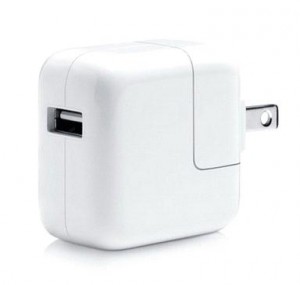
Now, aside from the new iPad heating up to 116 degrees Fahrenheit, the battery apparently barely charges up when in use. Some reports state that the battery fails to charge only when performing processor-intensive tasks, such as displaying videos and running games. But a test done by PCWorld indicated that even least CPU-intensive tasks, such as playing music, hindered the new iPad from charging properly.
“These results should be of concern to anyone considering the new iPad,” said Melissa J. Perenson of PCWorld. “Its lengthy recharge time and its extreme slowness to charge while in use give highly mobile users reason to question its travelworthiness.”
Though the new iPad is experiencing a bit of scrutiny, Apple might surpass Intel as the top seller of mobile processors used in a variety of computers and handheld devices, ranging from laptops to smartphones and tablets, says a recent study from NPD In-Stat which will be released on March 27th. A win for Apple!
Verizon vs. Lawmakers
 In a hearing by the Senate Judiciary subcommittee on antitrust, competition policy and consumer rights, lawmakers questioned Verizon Wireless and Comcast Corp. as to whether or not their impending deal would lead to the demise of FiOS – a bundled Internet access, telephone, and television service which operates over a fiber-optic communications network.
“You argue you won’t end FiOS . . . but how will we know you will keep the same level of price competition . . . against cable companies?” Sen. Herb Kohl (D-Wis.), chairman of the subcommittee, asked a Verizon Wireless executive.
Randal S. Milch, executive vice president and general counsel of Verizon, promised that their parent firm is committed to continuing FiOS arguing that the firm invested billions of dollars in building it out and cannot afford to abandon the service.
Comcast executive vice president David Cohen supported Verizon’s claims stating that, “Verizon announced over two and a half years ago that it did not intend to build FiOS out to additional areas, and the cable companies have made a considered business decision not to build a new wireless network.”
RIM loses on its own turf
 For the first time, Research in Motion lost to Apple in Canada – RIM’s turf. A report from Bloomberg stated that last year, RIM only shipped about 2.08 million BlackBerrys in Canada while Apple shipped 2.85 million units.
“For RIM, in its home market, to lose that No. 1 position to iPhone is strategically important,” said Paul Taylor, a fund manager at BMO Harris Private Banking in Toronto, who manages about $15 billion in assets, including RIM and Apple shares. “It does identify, even with a home-country bias, how consumers are responding to the greater functionality of the iPhone.”
RIM’s sales in Canada account for 7% of their revenue. It fell 23% in the fiscal third quarter compared to the previous year, while U.S. sales tumbled 45%. It resulted in worldwide revenue falling to 5.9%, offsetting rising emerging-market sales.
Hope for Google Wallet
 Google Wallet, the smart, virtual wallet from Google Inc., faced some setbacks since it launched. Aside from carriers refusing to use it because they’re developing their own virtual wallet, (Yes, I’m talking about Isis), Sprint, the only carrier supporting Google Wallet, only has two devices capable of supporting the payment platform. So is there still hope for Google Wallet?
Google is staying optimistic about their virtual wallet. Aside from Sprint, they are also partnered with Citibank, MasterCard and recently enlisted new partnerships with retailers like the Pinkberry frozen-yogurt chain, Macy’s department stores, Subway food chains, and American Eagle Outfitters clothing line.
“We’re enthusiastic about the progress we’re making with Google Wallet. Including Monday’s announcement of our newest national retail partner Pinkberry,” Google spokesman Nate Tyler wrote in an e-mail to CNET. “We continue to work hard to develop Google Wallet and build the partner ecosystem to make it possible for everyone to pay with their phones and get great deals while shopping.”
… We’d like to tell you about our mission and how you can help us fulfill it. SiliconANGLE Media Inc.’s business model is based on the intrinsic value of the content, not advertising. Unlike many online publications, we don’t have a paywall or run banner advertising, because we want to keep our journalism open, without influence or the need to chase traffic.The journalism, reporting and commentary on SiliconANGLE — along with live, unscripted video from our Silicon Valley studio and globe-trotting video teams at theCUBE — take a lot of hard work, time and money. Keeping the quality high requires the support of sponsors who are aligned with our vision of ad-free journalism content.
If you like the reporting, video interviews and other ad-free content here, please take a moment to check out a sample of the video content supported by our sponsors, tweet your support, and keep coming back to SiliconANGLE.






