






“Most people are right in saying ‘we’ve been doing DevOps for years.’ That’s mainly because there is not good canonical definition for DevOps,” John Willis wrote recently. Rather than try to provide a definition of DevOps, Willis goes on to describe the evolution of the DevOps movement as we know it today. According to Willis, the movement is the result of the convergence of three different threads:
1) The agile infrastructure community, which Willis describes as the most recognized thread. According to Willis, this thread evolved on the agile-sysadmin mailing list founded by Marcel Wegerman in 2008.
2) Velocity, the O’Reilly operations conference started in 2008.
3) The lean startup world, out of which came Jez Humble’s “continuous delivery.”
Willis also highlights some of the pivotal documents that made DevOps into what it is today.
This manifesto started it all. It kicked off the movement that has radically changed software development, became the namesake of the agile-sysadmin list and provided the inspiration for Jez Humble’s notion of “continuous delivery.” Of course the authors of the agile manifesto had its own influences, but this is where our story begins.
In 2006 Tim O’Reilly posted an article about Microsoft Live and the growing importance of operations as the tech industry began to warm up to the idea of cloud computing. In the article O’Reilly proposed that operations is the “elephant in the room” for Web 2.0.
About a year later Jesse Robbins expanded on O’Reilly’s previous article and explained that infrastructure and operations should be early concerns for startups.

The example above is the tale of two Web 2.0 startups scaling to 20 systems during their first three months. The first team starts writing software and installing systems as they go, waiting to deal with the “ops stuff” until they have an “ops person”. The second team dedicates someone to infrastructure for the first few weeks and ramps up from there. They won’t need to hire an “ops person” for a long time and can focus on building great technology.
According to Willis, these two posts set the ground work for the Velocity conference.
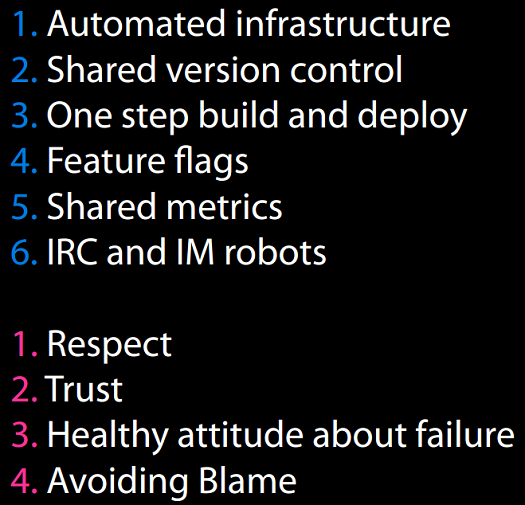
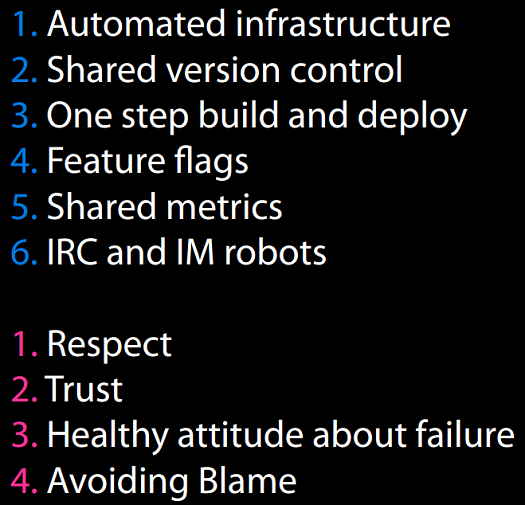
“Taking some creative license in recounting this event, I swear there were people throwing up in the back of the room from the sheer horror they had just witnessed,” Willis wrote about John Allspaw’s presentation at Velocity 2009. The idea of 10+ deployments per day was shocking at the time, and the presentation lays the ground work for today’s notion of DevOps.
You can watch the video of this presentation below or download a PDF of the slides.
According to Willis, this presentation inspired Patrick Debois, who was actively involved in the agile-sysadmin list, to start the first DevOps Days event in Ghent in late 2009. It also gave Debois the idea for the name of the event.
With the beginning of DevOps Days, the movement now had a name. More DevOps Days events sprung up, including DevOps Days Mountainview 2010, which was attended by Jay Lyman, who went on to write The Rise of DevOps report for the 451 Group. According to Willis, this was the first analyst report on DevOps.
Support our mission to keep content open and free by engaging with theCUBE community. Join theCUBE’s Alumni Trust Network, where technology leaders connect, share intelligence and create opportunities.
Founded by tech visionaries John Furrier and Dave Vellante, SiliconANGLE Media has built a dynamic ecosystem of industry-leading digital media brands that reach 15+ million elite tech professionals. Our new proprietary theCUBE AI Video Cloud is breaking ground in audience interaction, leveraging theCUBEai.com neural network to help technology companies make data-driven decisions and stay at the forefront of industry conversations.





