



 NEWS
NEWS
NEWS
NEWS
NEWS

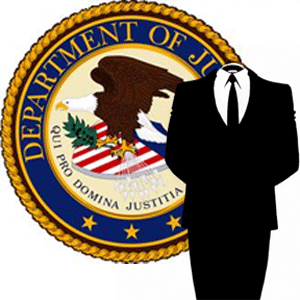
 In the wake of DDoS attacks against the UK Home Office, and the CIA, the International Business Times brings us the news that Anonymous cells have continued to disrupt government websites across the globe by washing away the US Department of Justice Website with a DDoS attack. The initial salvo against the cia.gov and justice.gov (the DOJ website) started with a Brazilian hactivist going by the moniker “Havaittaja” announcing via Twitter that they’d started a DDoS “for the lulz” and several other Anonymous cells quickly joined in.
According to current reports, CIA.gov had been down for approximately 45 minutes when justice.gov was taken offline due to bombardment by the Low Orbit Ion Cannon (LOIC) tool that is used commonly by Anonymous to direct distributed denial of service attacks against websites. The CIA.gov website remained offline for a little over an hour, and justice.gov remained inaccessible for what’s being reported as about an hour also.

This would be the third time that Anonymous has successfully disabled the CIA.gov website for almost an hour using DDoS as a disruption technique to draw attention to their activity. LulzSec downed the website in June last year, prompting security experts to point out the lack of sophistication in using DDoS attacks. Continuing this course, February this year Anonymous hit the CIA website again alongside numerous other government websites.
This follows another government website DDoS attack a mere week ago brewed by Anonymous against the UK “Home Office.”
These attacks, while annoying to the targets, do little to actually damage infrastructure or affect sensitive information. Instead, DDoS attacks only effect a sort of inability for the public to access public facing websites—it’s the equivalent of tearing down a poster. The collateral “splash” from the massive amount of traffic to knock the websites offline, however, does affect nearby websites by slowing them down and potentially making it hard to access them as well.
The cat-and-mouse battle between hactivists and the police continues to brew as well with a multitude of arrests occurring last year. The FBI has already arrested (and turned) the leader of LulzSec, Sabu, and used him to find the rest of LulzSec. Late last year a hacker who committed a DDoS attack against GeneSimmons.com—not something that even made much news—was arrested by the FBI as well.
Law enforcement may slowly home in on them; but hackers who engage in these protests do suffer a certain amount of attrition.
… We’d like to tell you about our mission and how you can help us fulfill it. SiliconANGLE Media Inc.’s business model is based on the intrinsic value of the content, not advertising. Unlike many online publications, we don’t have a paywall or run banner advertising, because we want to keep our journalism open, without influence or the need to chase traffic.The journalism, reporting and commentary on SiliconANGLE — along with live, unscripted video from our Silicon Valley studio and globe-trotting video teams at theCUBE — take a lot of hard work, time and money. Keeping the quality high requires the support of sponsors who are aligned with our vision of ad-free journalism content.
If you like the reporting, video interviews and other ad-free content here, please take a moment to check out a sample of the video content supported by our sponsors, tweet your support, and keep coming back to SiliconANGLE.






