





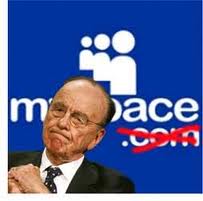
 News Corporation, the media group owned by Rupert Murdoch, shaken by the scandal of illegal phone tapping of some of the British personalities, announced in a brief statement that the company will split into two separate companies.
News Corp. explained one of the public companies will take care of the television and film business such as 20th Century Fox, the Fox broadcasting network and News Corp’s stake in BSkyB, while the other will handle various publication houses including CNNMoney, The Wall Street Journal, The Times, The Sunday Times, The Sun, The Australian, Dow Jones newswire, publisher HarperCollins and The New York Post.
“The proposed transaction would create global category leaders in both publishing and entertainment: a publishing company, which would be comprised of News Corporation’s newspapers and information businesses in the U.S., U.K., and Australia, the Company’s leading book publishing brands, its integrated marketing services company, its digital education group, as well as its other assets in Australia; and a global media and entertainment company, which would encompass News Corporation’s broadcast and worldwide cable networks, leading film and television production studios, television stations and highly successful pay-TV businesses in Europe and India,” the company said in a statement.
As expected, even with the reform of the structure of Murdoch’s business empire, he will retain control of both entities. The billionaire and his family currently control about 40 percent of the voting shares of News Corp.
“We’ve come a long way in our journey that began nearly 60 years ago with a single newspaper operating out of Adelaide,” Murdoch said, referring to his first Australian newspaper. “Each of these new companies would have the potential to continue that journey and prosper as an independent entity long into the future.”
Meanwhile, Chase Carey will serve as the new CEO of the entertainment company. The company did not disclose who will be the chief executive for the publishing company.
Spilt Driven by Hacking Scandal
 The move is widely seen as an attempt to limit the damage after a scandal in Britain for journalist wiretapping of politicians, celebrities and victims of war, although News Corp. denied the split has nothing to do with the phone hacks. Since then there’s been mounting pressure on News Corp. to get rid of its newspaper business.
Journalists and News Corp. executives were charged for the phone line interventions. Several have resigned while others have been dismissed. Murdoch and his son had appeared before a commission that investigated the facts.
In addition to the scandal, the company was badly hurt in its attempts to buy into digital media, leading to a drop in advertising revenue and circulation sales.
Let’s look at some of News Corp.’s biggest blunders:
Fall of MySpace
 In 2005 Rupert Murdoch bought MySpace for $580 million as an entry strategy into the world of digital mass media. It was his attempt to make the leap to the business of Internet advertising, where giants like Google, Microsoft and more recently, Facebook have been hoarding dominate market shares and the favor of advertisers compared to traditional media groups.
At its peak MySpace attracted just over 95 million users. MySpace has been overtaken by competition and progressively lost the supremacy it had at the time of purchase. The MySpace audience has plummeted in the last four years compared to the rise of other networks such as Facebook or Twitter. In the period of just one month, according to statistics from ComScore, MySpace lost 10 million unique users.
Finally Murdoch sold the MySpace social network for $35 million, valuing the company at 93 percent lower than what he paid six years ago.
BskyB Acquisition
Murdoch wants to acquire 100 percent of the BSkyB network, the leading pay-TV provider in the UK, where he already has a nearly 40 percent share.
But the recent illegal wiretapping scandal changed everything for News International. The weekly British tabloid News of the World announced its end last year after 168 years in circulation.
Although initially the damage would be limited to News of the World, the scandal had led to the failure of the purchase of BSkyB, which became a major setback for Murdoch.
… We’d like to tell you about our mission and how you can help us fulfill it. SiliconANGLE Media Inc.’s business model is based on the intrinsic value of the content, not advertising. Unlike many online publications, we don’t have a paywall or run banner advertising, because we want to keep our journalism open, without influence or the need to chase traffic.The journalism, reporting and commentary on SiliconANGLE — along with live, unscripted video from our Silicon Valley studio and globe-trotting video teams at theCUBE — take a lot of hard work, time and money. Keeping the quality high requires the support of sponsors who are aligned with our vision of ad-free journalism content.
If you like the reporting, video interviews and other ad-free content here, please take a moment to check out a sample of the video content supported by our sponsors, tweet your support, and keep coming back to SiliconANGLE.






