



 NEWS
NEWS
NEWS
NEWS
NEWS

 Google Maps continues to be the most popular mapping service around, but what with increased competition from the likes of OpenStreetMap, the internet giant clearly feels that it needs to do more to entice users to stick with its offering.
To do so, Google has rolled out two new additions to its service that will benefit both users who want to know where they’re heading, and also developers wishing to make money from the world’s number one navigation app.
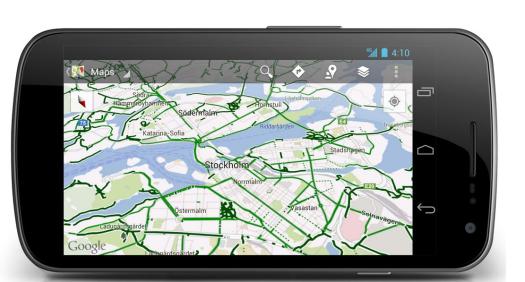
Kicking off at the user end, Google has introduced yet another new feature to help people find their way around more easily, this time specifically targeting cyclists with voice guided, turn-by-turn navigation. The directions aspect is nothing new (at least not for US and Candian users), but the fact that cyclists can now just plug in their earphones, program their route and then head off into the sunset, guided by their ‘personal assistant’ every step of the way is sure to add extra appeal.
Meanwhile, ten more countries – Australia, Austria, Belgium, Denmark, Finland, the Netherlands, Norway, Sweden, Switzerland and the UK – have all received the directions for cyclists feature, bringing Google Maps’ total mileage of cycle routes up to an impressive 330,000. These include roads with cycle paths, biking trails and other roads that are designated as being suitable for cyclists.
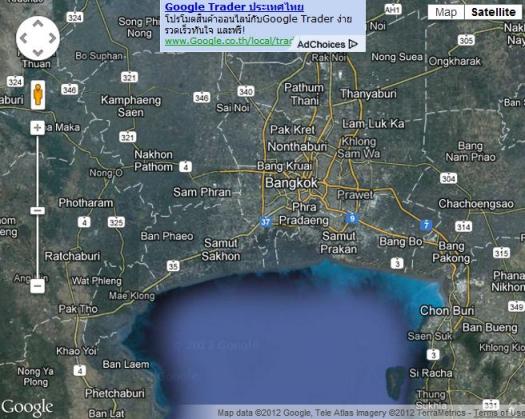
For developers, Google has made additional changes in an attempt to make it easier to monetize the app. For years, all Google had on offer was one, inflexible ad unit – this has now been bolstered with the addition of six new customizable ad formats that developers can integrate into the tool.
Customization options include the ability to select colors for links, text and borders of the ads, allowing developers to match the color scheme to their own websites, the idea being that they will appear much more ‘subtle’, and consequently, make them more likely to be clicked.
Even better, the ads now incorporate Google’s popular link unit. While the ads look much the same as standard Adsense links, when clicked users will instead be redirected a page of related URLs, as opposed to heading directly to an advertiser’s website, making it easier for developers to display more ads that are relevant to their site.
The update is interesting because many site owners despise Adsense for its low profitability; at least with the new flexibility, some developers might be prepared to take a second look and see if they can better maximize their click-through ratios.
… We’d like to tell you about our mission and how you can help us fulfill it. SiliconANGLE Media Inc.’s business model is based on the intrinsic value of the content, not advertising. Unlike many online publications, we don’t have a paywall or run banner advertising, because we want to keep our journalism open, without influence or the need to chase traffic.The journalism, reporting and commentary on SiliconANGLE — along with live, unscripted video from our Silicon Valley studio and globe-trotting video teams at theCUBE — take a lot of hard work, time and money. Keeping the quality high requires the support of sponsors who are aligned with our vision of ad-free journalism content.
If you like the reporting, video interviews and other ad-free content here, please take a moment to check out a sample of the video content supported by our sponsors, tweet your support, and keep coming back to SiliconANGLE.






