




 Hewlett-Packard CEO Meg Whitman recently revealed that her company is ultimately planning on reviving their smartphone initiative since, in many countries, the smartphone is one’s primary computing device. That’s great for HP–at least they’re positive about the future. But haven’t they already tried the whole smartphone thing, and failed?
.
HP’s first smartphone was the iPaq h6315, a device that combined their previous PDA, the HP 2215 with cellular capability, which was released back in 2004. It featured a TFT resistive touchscreen, support for WiFi, Bluetooth, infrared, USB, Microsoft Windows Mobile 2003 PocketPC Phone Edition for the OS and a lot more but people complained that it was too bulky. Yes, it was popular but only for a brief period so they released other smartphones.
In 2007 HP released the HP IPAQ 500 Series Voice Messenger, which looked a lot like one of Nokia’s feature phones. It had voice command capabilities, let you to access your e-mail, has WiFi, Bluetooth support and runs Windows Mobile 6 Standard operating system.
Pre-smartphone
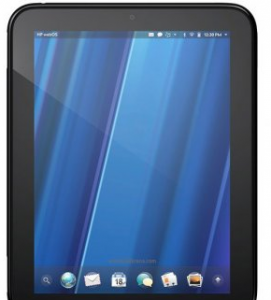
Then in 2010 HP bought Palm Inc., the makers of Personal Digital Assistants (PDAs), for $1.2 billion. At first, the PDAs kept the Palm brand but in February 2011, all PDAs were rebranded as HP devices. They run on webOS, a mobile operating system based on a Linux kernel initially developed by Palm. But just a few months after rebranding Palm to HP, then HP CEO Leo Apotheker announced that they would stop shipping and making webOS devices, which meant that HP’s mobile unit would be in jeopardy. The announcement was followed by the fire sale of their TouchPad.
“Our WebOS devices have not gained enough traction in the marketplace with consumers,” Apotheker said in an interview regarding the fate of webOS. “We’re looking at all business models, from licensing to any other possibility for webOS.”
A tale of two strategies
 Apotheker was soon replaced by Whitman and the fate of webOS turned. Last February, they announced “the delivery of some of the milestones from our previously announced roadmap for Open webOS: QtWebKit (a.k.a. “Cute” WebKit) and Isis. QtWebKit will power the next generation of the platform, while Isis is the new webOS browser that is both fast and standards-compliant.”
And they’ve since open sourced webOS, encouraging developers to work with their revamped OS. The question is, will developers be curious enough to try their revamped OS?
.
There are a lot of new and better smartphones that have flooded the market since HP’s first attempts, bypassing the PC-maker’s efforts to impact the mobile market. So what can HP do to penetrate this saturated space?
High quality, low price
First off, they could trump competition by being able to offer top notch devices at very affordable prices. A lot of people are still using feature phones because smartphones are way too expensive. So if they can deliver a smartphone that has a great display, almost unbreakable screen, fast processor, have GPS, WiFi, Bluetooth, NFC, LTE capabilities, a butt-kickin’ front and rear camera, and is lightweight and fashionable, they may have something compelling to offer consumers.
Streamline webOS
Second, HP really should work on webOS. What makes Apple’s iOS seem better than Android’s fragmented system is that when an update becomes available, all supported iDevices get it. Since HP is open-sourcing webOS, they should make a note to learn from Google’s mistake. Instead of putting the power of delivering updates to phone manufacturers or carriers, HP should be the one to push the update to consumers. HP, OEMs and carriers should work together to make sure that the update would work on all webOS devices.
Target enterprise with Windows 8
Apple and iOS have dominated the mobile scene for a few years now, all the while Microsoft’s been watching and waiting. The Redmond, WA software maker has an established presence in the enterprise, and as consumerization brings more mobile into the workplace, a dedicated device for workers could be the compromise between employees and IT.
HP has already revealed its plan to produce mobile devices for Microsoft’s upcoming Windows 8 OS, which brings a second chance to the winning combo HP and Microsoft became for the PC market.
Innovate
Apple often complains that their rivals don’t innovate, but merely copy and reapply popular design into cheaper, accessible products. HP could heed Apple’s advice and deliver something game-changing in order to make a true impact on the mobile market. Start with some hard core research to find out what people really want from smartphones. There’s a balance to strike, between overburdening users with smartphone features and making a truly usable device. Let’s hope HP can come up with the winning strategy for today’s competitive mobile market.
… We’d like to tell you about our mission and how you can help us fulfill it. SiliconANGLE Media Inc.’s business model is based on the intrinsic value of the content, not advertising. Unlike many online publications, we don’t have a paywall or run banner advertising, because we want to keep our journalism open, without influence or the need to chase traffic.The journalism, reporting and commentary on SiliconANGLE — along with live, unscripted video from our Silicon Valley studio and globe-trotting video teams at theCUBE — take a lot of hard work, time and money. Keeping the quality high requires the support of sponsors who are aligned with our vision of ad-free journalism content.
If you like the reporting, video interviews and other ad-free content here, please take a moment to check out a sample of the video content supported by our sponsors, tweet your support, and keep coming back to SiliconANGLE.






