



 NEWS
NEWS
NEWS
NEWS
NEWS

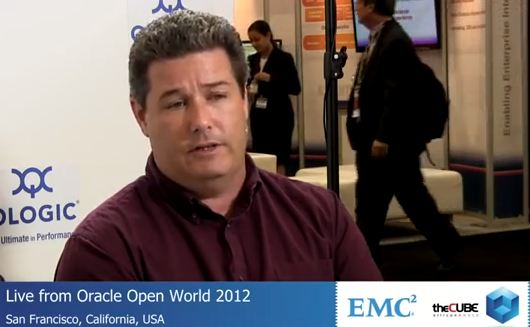
 Darryl Smith, the Chief Oracle Architect in EMC’s Global IT organization sat down on theCube at Oracle Open World 2012 to talk about the EMC Oracle environment and how they are meeting the incredible demands of that environment. Smith is responsible for all databases at EMC, including one of the largest Oracle Applications and Database Grid deployments in the world. With Smith in this role, the organization has captured and documented best practices learned from managing a global deployment of Oracle Applications, Middleware and Database Grids and actively engaging with EMC and Oracle customers to share EMC’s experiences.
The environment consists of close to 900 Databases. Some 100TB are backed up daily and that total is growing. There was a time where incremental backups were utilized but that was not able to satisfy the increasing demands. While incremental strategies were great for saving space on tape drives and disk arrays, it had limited benefit in terms of recovery. With recovery so critical in such an environment, the restore methodology of restoring a full backup, then restoring all incremental backups to get to a particular state was impractical. Data Domain has made full daily backups possible using the same space as incremental. The goal is zero recovery point objective (RPO). With zero RPO, there can be no data loss whatsoever, so the backup strategy that is implemented cannot have any gap between the last state and the available backup data. This is achieved at EMC with data replication strategies such as SRDF that replicate data from their primary Massachusetts data center to the Durham, NC datacenter. The Recovery Time Objective (RTO) is the main driver that affects methodology.
Oracle’s RMAN Recovery Manager is used extensively as all of EMC’s products are designed to work with it. In fact where data is offloaded in a proxy configuration, RMAN understands that this is a point to integrate and is in fact configured in some cases to use Networker as its virtual tape device, backing up to whatever virtual tape array is in place. In this case it is Data Domain. The strategy also allows for quick reversal of clones in the environment and rolling forward immediately. Some databases are backed up directly to storage clones, others are direct to Networker and leads to Data Domain from there, others are simple data exports right onto Data Domain. The combination of these methods constitutes the overall environment.
An impressive 98% of all the server base is virtualized. Another 84% represents the database virtualization and in the new Propel database environment, which is based on SAP running Oracle’s databases, the virtualization rate is 100% and is running well. Virtualization is a goal, but primary concerns were around performance. After spending lots of time with performance experts and VMware, they have come up with standards and best practices that have met these performance goals and have even exceeded them.
Cloud backup had once been a challenge, but with Data Domain Boost, that has largely been overcome. The traditional challenge meant that cloud backup required workarounds. A moving target that included cloud would cause one issue that needed to be overcome. With DD Boost, the strategy is abstracted from hardware infrastructure. Smith adds that the best way to go about backup architecture is to plan ahead, make sure that the infrastructure keeps up, and realize that tape strategy alone cannot support you anymore.
… We’d like to tell you about our mission and how you can help us fulfill it. SiliconANGLE Media Inc.’s business model is based on the intrinsic value of the content, not advertising. Unlike many online publications, we don’t have a paywall or run banner advertising, because we want to keep our journalism open, without influence or the need to chase traffic.The journalism, reporting and commentary on SiliconANGLE — along with live, unscripted video from our Silicon Valley studio and globe-trotting video teams at theCUBE — take a lot of hard work, time and money. Keeping the quality high requires the support of sponsors who are aligned with our vision of ad-free journalism content.
If you like the reporting, video interviews and other ad-free content here, please take a moment to check out a sample of the video content supported by our sponsors, tweet your support, and keep coming back to SiliconANGLE.






