




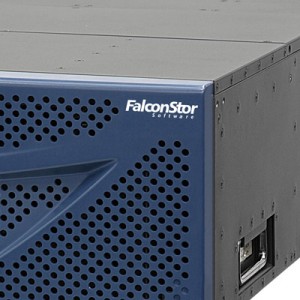
 FalconStor posted results for Q3 2012 last Wednesday. The company, a provider of data protection solutions for the enterprise, saw weakened demand for its products in the quarter ended September 30, but managed to cut its losses.
FalconStor made$17.1 million in the past three months compared with the $18.9 million it reported for the third quarter of 2011, a 9 percent decline that CEO Jim McNiel blames on a “a difficult macro environment” in the global marketplace.
“The uncertainty surrounding the global marketplace continues to cause disruptions in our business, specifically with budget freezes, elongated sales cycles, or, in some cases, lost deals due to competitive pricing and sales strategies.” McNiel said during the earnings call. “Finally, we believe that the steps we took during the third quarter to reduce our operating expenses in response to the current environment have left us well-positioned to execute on our plan to invest in our existing and our new product initiatives.”
FalconStor posted a GAAP net loss of $3.6 million or 8 cents a share, much lower than the $5.4 million it reported 12 months ago. Non-GAAP loss stood at $3.1 million in the last quarter.
Enterprises are getting smarter about their IT budgets, and vendors such as FalconStor are investing a lot of resources to make sure they get their share of this growing market opportunity. HP and IBM have been doing something similar in the storage space.
The two vendors both unveiled new SMB storage products this week, with an emphasis on budget-friendliness. Hewlett-Packard introduced two new StoreVirtual machines, as well an entirely new line up called StoreEasy that’s tailored for large amounts of data rather than virtualization. And Big Blue unveiled a scaled-down Storwize box that offers small to medium businesses enterprise functionality for only $10K.
… We’d like to tell you about our mission and how you can help us fulfill it. SiliconANGLE Media Inc.’s business model is based on the intrinsic value of the content, not advertising. Unlike many online publications, we don’t have a paywall or run banner advertising, because we want to keep our journalism open, without influence or the need to chase traffic.The journalism, reporting and commentary on SiliconANGLE — along with live, unscripted video from our Silicon Valley studio and globe-trotting video teams at theCUBE — take a lot of hard work, time and money. Keeping the quality high requires the support of sponsors who are aligned with our vision of ad-free journalism content.
If you like the reporting, video interviews and other ad-free content here, please take a moment to check out a sample of the video content supported by our sponsors, tweet your support, and keep coming back to SiliconANGLE.






