



 NEWS
NEWS
NEWS
NEWS
NEWS

 The Israeli government has reported no less than 44 million hacking attempts against security, governmental, and financial websites over the weekend as violence in the Gaza strip continues to escalate. Many of these attacks could be attributed to Anonymous, the hacktivist collective, who have gone back to their moral roots en masse and taken to cyberspace to make their voices clear on the matter.
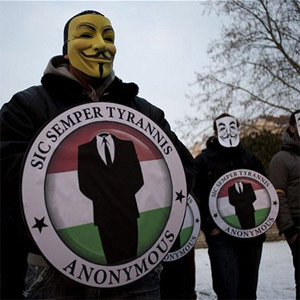
A Pastebin post from a cell of the collective listed over 50 websites taken offline in the initial wave of protest from the collective. The post was released with little fanfare, no manifesto, and included the hashtags #OpIsrael and #GazaUnderAttack. Reports suggest that over 300 sites have come under attack, among them the Bank of Jerusalem. Those sites affected were vandalized or shut-down by attackers with the placement of common Anonymous ideography such as the Guy Fawkes mask or the Anonymous “man wearing suit with no head.”
On Friday, the Anon Relations released a long manifesto outlined the reasons for the massive attack against Israeli targets. It suggests that the triggering event was Israel’s threat to kill Internet connectivity to people in the Gaza strip. In the past, Anonymous have chosen their battles based on the ability of people to access free information and be part of collective communication—
“But when the government of Israel publicly threatened to sever all Internet and other telecommunications into and out of Gaza they crossed a line in the sand,” wrote an Anonymous cell spokesperson on Anon Relations. “As the former dictator of Egypt Mubarack learned the hard way – we are ANONYMOUS and NO ONE shuts down the Internet on our watch.” The message continued on to mention aid that would arrive from Anonymous in digital form including software, information on how to evade Internet surveillance, and how to reconnect to the Internet even if communications were cut off.
According to an article in The Telegraph UK, a post to AnonPaste solidified this underlying reason for the cyberattack from the collective:
“The reasons for Anonymous intervention through #OpIsrael should be abundantly clear: What is happening in Palestine is oppression. They have no navy, no army, or air force. There is no war in Gaza. There is only the continuous application of military force by Israel in an attempt to push every last person out of the Palestinian state, despite international laws that make these efforts illegal.”
The attacks against Israeli institutions and government websites reached their peak on Sunday with ten million attempts against Israel’s President Shimon Peres, seven million on the foreign ministry, and three million against Israel’s prime minister’s website.
The finance minister of Israel, Yuval Steinitz is quoted saying that the government was waging a second war now on “a second front – of cyber attacks against Israel.”
“The ministry’s computer division will continue to block the millions of cyber attacks,” Steinitz said. “We are enjoying the fruits of our investment in recent years in developing computerised defence systems.”
The fundamental difference between waging war and an attack from the Anonymous collective, however, is one not of numbers but of source. Warfare at least has a specific enemy, in a specific place—they might outflank or outthink you—but when it comes to Anonymous and the Internet, attacks can come from any country that harbors sympathizers, which undoubtedly contains most first world countries and large portions of the world.
With the prevalence of poorly built websites, SQL-injection vulnerabilities, and enough determined attackers it’s likely that the Israeli cyberspace will continue to see fireworks this entire week.
[Image credit: AP Photo, Anonymous protest in Hungary in February]
… We’d like to tell you about our mission and how you can help us fulfill it. SiliconANGLE Media Inc.’s business model is based on the intrinsic value of the content, not advertising. Unlike many online publications, we don’t have a paywall or run banner advertising, because we want to keep our journalism open, without influence or the need to chase traffic.The journalism, reporting and commentary on SiliconANGLE — along with live, unscripted video from our Silicon Valley studio and globe-trotting video teams at theCUBE — take a lot of hard work, time and money. Keeping the quality high requires the support of sponsors who are aligned with our vision of ad-free journalism content.
If you like the reporting, video interviews and other ad-free content here, please take a moment to check out a sample of the video content supported by our sponsors, tweet your support, and keep coming back to SiliconANGLE.






