




 In today’s mobile era, workers are reluctant to part with their devices in exchange for company-issued BBs and aging laptops. Smartphones and tablets offer greater convenience, improved user experience and have been proven to increase worker productivity on numerous occasions – but like with everything, there’s a catch.
The problem is that the bring-your-own-device trend is not confined to one operating system. Employees own iPhones, iPads, Android devices and everything in between; an actuality that makes it immensely difficult to secure every last phone or table on the corporate network. Apple’s closed-knit ecosystem – plus the fact that Android’s source code is completely open – is certainly not making things any easier for IT departments.
A solution is in sight, however. Mark Hopkins pegs it the death of BYOD: the organic transition to Windows 8.
Microsoft’s mobile OS may not possess the market share of its rivals, but it represents a big opportunity for the enterprise. Hopkins believes that Windows 8 devices, coupled with the right management software, will provide an extremely viable alternative to BYOD for both companies and workers.
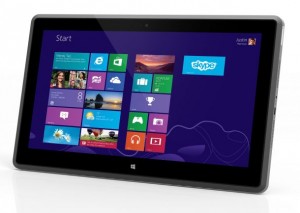
This prediction is quickly turning into a trend. Vizio, an emerging manufacturer that barely head enough time to establish a market presence, is already beefing up its line-up with a 11.6-inch Tablet that runs on Windows 8. And the AMD-powered device, purposely spelled with a capital T, is not alone
Lenovo launched several new products over the weekend leading up to CES, including two all-in-one devices that are promoted as movable alternatives to Apple iMac. The Chinese PC maker also introduced a mobile monitor that’s essentially a table without the processor. All three hybrid devices represent something uniquely different tfrom the tablets we’ve come to know, and all three run on Windows 8.
… We’d like to tell you about our mission and how you can help us fulfill it. SiliconANGLE Media Inc.’s business model is based on the intrinsic value of the content, not advertising. Unlike many online publications, we don’t have a paywall or run banner advertising, because we want to keep our journalism open, without influence or the need to chase traffic.The journalism, reporting and commentary on SiliconANGLE — along with live, unscripted video from our Silicon Valley studio and globe-trotting video teams at theCUBE — take a lot of hard work, time and money. Keeping the quality high requires the support of sponsors who are aligned with our vision of ad-free journalism content.
If you like the reporting, video interviews and other ad-free content here, please take a moment to check out a sample of the video content supported by our sponsors, tweet your support, and keep coming back to SiliconANGLE.






