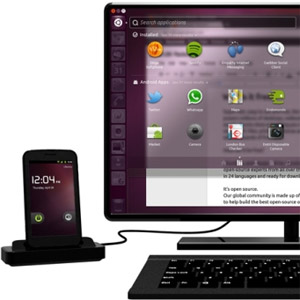







Canonical, the London-based company, just unveiled its brand new Ubuntu phone and the pre-release version of the operating system running on high-end Android hardware. The mobile interface demonstration was given by Mark Shuttlesoworth – founder of Canonical, who demonstrated what it’s like to navigate through the Ubuntu OS, browsing through a number of native applications and system features.
“Generally, you see a lot of content [in the Ubuntu OS],” Shuttlesworth said. “It’s very open, very beautiful. Apps on the left, so it’s just like the Ubuntu launcher on the laptop. On the right, you can go back, and you can go back through a series of apps essentially, just cycle through them. The home screen is down here, and there are scopes [applications], just like you see on your desktop. You can search anything that you’d be searching on the desktop right from your phone.”
 The distinguishing features of an Ubuntu phone will be no home button, and that it will run both Linux native apps written in QML, and Web apps written in HTML5, CSS, and JavaScript.
According to the company, it will sell Ubuntu phones on a mix of high-end and low-end phones. While the Ubuntu phones are expected to be available in late 2013, Canonical has yet to reveal which the networks and companies making hardware for it.
The smartphone market is gradually becoming more and more competitive. With their giant-sized presence, Android and iOS will be the biggest competitors of the Ubuntu OS phone. Not only this, a few days back Samsung was set to throw its weight behind its new Tizen operating system, tying up a deal with Japan’s NTT Docomo to release the first Tizen-based smartphone later this year. Looks like a tough road ahead for Ubuntu to establish itself in cutthroat mobile OS market!
Support our mission to keep content open and free by engaging with theCUBE community. Join theCUBE’s Alumni Trust Network, where technology leaders connect, share intelligence and create opportunities.
Founded by tech visionaries John Furrier and Dave Vellante, SiliconANGLE Media has built a dynamic ecosystem of industry-leading digital media brands that reach 15+ million elite tech professionals. Our new proprietary theCUBE AI Video Cloud is breaking ground in audience interaction, leveraging theCUBEai.com neural network to help technology companies make data-driven decisions and stay at the forefront of industry conversations.





