





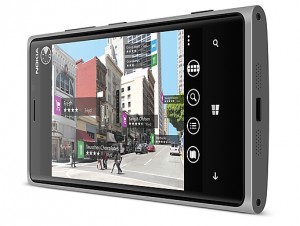
 Nokia’s latest quarterly earnings report reveals some promising numbers for the Finnish smartphone maker and its continuous improvement with the Windows 8-powered Lumia sales worldwide, but it’s struggling in the U.S. In fact, North America was the only country that witnessed a decline in Nokia Lumia sales, while China seems hungry for Nokia’s high end device. Is Nokia channeling its marketing and research efforts in the right direction, or should the phone maker broaden its Lumia lineup to become more competitive in the highly saturated U.S. market?
I think the right balance between marketing and R&D, something Nokia’s known for, could help the Lumia manufacturer sell more devices stateside.
“Looking at Nokia historically, they’ve always been pretty strong on the international stage,” I said during an appearance on this morning’s Live NewsDesk Show with Kristin Feledy. “So it’s not entirely surprising to see that they’ve done well overall, but it is a little bit disheartening to see that they are actually declining in the U.S. The U.S. smartphone market is highly competitive, though this is also the case in other countries like China. But the U.S. is a key market, very saturated with Apple devices and Android devices, and the competition is certainly high here. One factor that could come into play here is that balance between R&D and marketing. On the marketing side, we could see some improvements if Nokia expands their line and finds some additional partners as far as carriers go in the U.S.”
And those partnerships could come sooner rather than later. While Nokia’s been working closely with AT&T to push the Lumia line, recent leaks indicate the Finnish phone maker could be teaming with Verizon for a new device launch. Images recently leaked of a Lumia 928 for Verizon, begging the question, can a revamped handset help its sales in the U.S.?
Given Nokia’s experience and influence in R&D, a broadened lineup could also serve its partnership with Microsoft well. Nokia’s really pulled back from its own mobile OS, building around Windows Phone 8 for a second chance in the market. A whopping two-thirds of the 5.6 million Lumia devices sold in Q1 of this year were powered by Windows Phone 8, and Nokia’s growth indicates a hopeful recovery from the billions its lost in recent years.
It’s a partnership that could benefit Microsoft as well, which has seen dismal sales of its own hardware efforts. The Surface tablet line was Microsoft’s first foray into the mobile hardware sector, hoping to push its completely reworked mobile OS directly to consumers. But perhaps Nokia and Microsoft are the perfect vehicles for each others’ goals, and these tech giants should stick to their respective strengths.
… We’d like to tell you about our mission and how you can help us fulfill it. SiliconANGLE Media Inc.’s business model is based on the intrinsic value of the content, not advertising. Unlike many online publications, we don’t have a paywall or run banner advertising, because we want to keep our journalism open, without influence or the need to chase traffic.The journalism, reporting and commentary on SiliconANGLE — along with live, unscripted video from our Silicon Valley studio and globe-trotting video teams at theCUBE — take a lot of hard work, time and money. Keeping the quality high requires the support of sponsors who are aligned with our vision of ad-free journalism content.
If you like the reporting, video interviews and other ad-free content here, please take a moment to check out a sample of the video content supported by our sponsors, tweet your support, and keep coming back to SiliconANGLE.






