





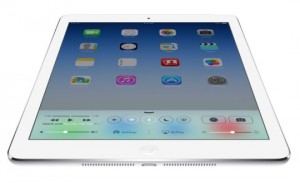
 It’s been an interesting few weeks in the tablet arena, with the blogosphere noticeably more abuzz in the month leading up to the debut of the Retina-equipped iPad. It all started with a little spark: a hastily recorded video claiming to match up the iPad 4 against Apple’s fifth generation tablet.
Uploaded by Chinese parts supplier sw-box.com, the 6-minute clip features a thinner and more minimalistic iPad that measures 9.4 inches in height and 6.7 inches across. The device appeared to be more similar to the Mini than its full-sized predecessor, featuring two separate buttons for volume control and rounder edges.
Three weeks later at a company event in San Francisco, Apple CEO Tim Cook unveiled his company’s next generation tablet and finally put an end to the rumors. At 7.5 millimeters, the iPad Air is thinner than a pencil and 20 percent more compact than Apple’s previous full-sized tablet. It’s also extremely light, weighing in at only one pound, down from the 1.4 pounds of its predecessor.
Wasting no time, SiliconANGLE’s Mellisa Tolentino jumped right into the fray to investigate how Apple’s latest tablet compares to the Lumia 2520, Nokia’s first attempt at a tablet. It’s not exactly a fair fight. The iPad Air sports a powerful 64-bit A7 chip with a M7 motion coprocessor that delivers 72 times the graphical performance of the original iPad, while the 2520 packs a 2.2GHz Qualcomm Snapdragon 800. The Air also provides a 9.7-inch display with a 2048-by-1536 resolution and a pixel density of 264ppi, giving it a graphical edge over the 1920 x 1080p screen of Nokia’s rivaling tablet.
The Air might be sharp, but it doesn’t quite match the HDX. Amazon’s newest Kindle Fire model packs 4,096,000 pixels into a 8.9-inch display for a pixel density of 339ppi.
For more details on these stories, check out SiliconANGLE’s Springpad notebook by clicking on the widget below.
… We’d like to tell you about our mission and how you can help us fulfill it. SiliconANGLE Media Inc.’s business model is based on the intrinsic value of the content, not advertising. Unlike many online publications, we don’t have a paywall or run banner advertising, because we want to keep our journalism open, without influence or the need to chase traffic.The journalism, reporting and commentary on SiliconANGLE — along with live, unscripted video from our Silicon Valley studio and globe-trotting video teams at theCUBE — take a lot of hard work, time and money. Keeping the quality high requires the support of sponsors who are aligned with our vision of ad-free journalism content.
If you like the reporting, video interviews and other ad-free content here, please take a moment to check out a sample of the video content supported by our sponsors, tweet your support, and keep coming back to SiliconANGLE.






