




 Fusion-io, the company that single-handedly put server-side flash on the CIO’s radar, is now making a splash in the hybrid storage market with its ioControl array for small and medium enterprises.
Unveiled just three months ago, the system is based on technology from NexGen Storage, the Colorado-based appliance maker Fusion-io acquired last August for $119 million. The venture-backed startup was established in 2010 by the original founders of LeftHand Networks, the hugely successful SAN firm that sold out to HP for $360 million two years prior, and had 50 employees at the time of the acquisition.
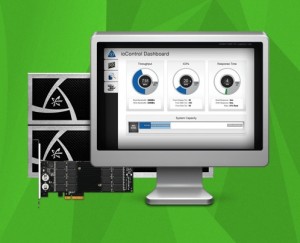
The platform combines Fusion-io’s ultra-low latency ioMemory technology with disk capacity to provide shared storage for computationally-intensive applications, particularly virtualized workloads, at a much lower price point than all-flash alternatives. It also ships with sophisticated management software that lets admin set minimum IOPS, throughput and latency values for individual applications.
A newly published benchmarking study by the Tolly Group found that ioControl outperforms other hybrid storage arrays by up to 7 times in virtual desktop environments. In a test deployment, the array provided higher virtual machine density with 60 percent lower latency than several rivaling offerings, the validation specialist reported, and effectively handled boot storms caused by users logging on at the same time.
“Conventional SSD hybrid storage arrays offer acceptable performance for small datasets, but they are ultimately limited by SSD architectures,” Kevin Tolly, founder of the Tolly Group, said in a prepared statement. “From raw performance to VDI and virtual machine testing, the Fusion ioControl hybrid flash array delivered higher performance and scalability than the hybrid SSD array, showcasing that ioControl provides an excellent choice for companies evaluating hybrid flash solutions for their datacenter.”
Hybrid is becoming an increasingly popular choice in storage, enhancing existing architectures and improving efficiencies across the datacenter. VMware and others continue to improve their hybrid flash arrays for the storage market, providing more viable alternatives for the CIO to consider, particularly in the enterprise.
“I think a lot of it depends on the entity, the customer organization,” said Dan Timko, the president and CTO of Cirrity. “We see the SMBs…don’t have enough of a workload to do hybrid so they’ll either keep it private or go all public. [When] you get more into the midmarket and the enterprise customers, they’re playing more in…hybrid. They’ve got a good private base right now; they’re starting to test the waters, move workloads up and do specific things with it.”
… We’d like to tell you about our mission and how you can help us fulfill it. SiliconANGLE Media Inc.’s business model is based on the intrinsic value of the content, not advertising. Unlike many online publications, we don’t have a paywall or run banner advertising, because we want to keep our journalism open, without influence or the need to chase traffic.The journalism, reporting and commentary on SiliconANGLE — along with live, unscripted video from our Silicon Valley studio and globe-trotting video teams at theCUBE — take a lot of hard work, time and money. Keeping the quality high requires the support of sponsors who are aligned with our vision of ad-free journalism content.
If you like the reporting, video interviews and other ad-free content here, please take a moment to check out a sample of the video content supported by our sponsors, tweet your support, and keep coming back to SiliconANGLE.






