





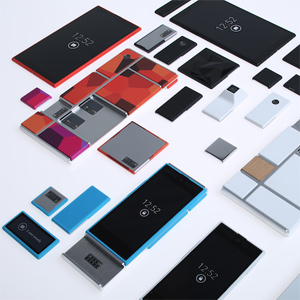
 Google’s experiment with the modular smartphone has become more concrete. Next month, Google will start shipping developer boards for Project Ara, which are designed to facilitate development of modules as defined in the MDK.
In a blog entry, Google released information about the first developer boards on which snap-on modules can be prototyped and tested. Developers can apply to get a developer board on Google’s website. The application period will end on July 11 and the first version of the board will ship by the end of July.
The developer boards will allow users to explore the Project Ara platform, and will include multiple reference “modules” on board so that hardware and software developers can begin to experiment with the platform–both in designing new modules and in getting existing software and Android OS running on the new devices.
The company seeks to provide a build-your-own smartphone in which users can combine and customize the features they want. The buyer will obtain the frame with a blank phone screen that can be fitted with various modular part as needed. Google has provided an example of an antenna and a camera module that can be removed, and developers have proposed a storage, dock, game pad, RF transmitter module and a thermometer.
“Since we only have limited quantities of developer hardware, we ask that you please tell us about how you plan to use it,” Google said on the Project Ara developer board page.
The idea is to allow the replacement of the display and any other hardware component, including battery, processor, and so on. What is more interesting, however, is the possibility to customize a smartwatch depending on activity. For example, if a customer intends to use it for fitness, it will able to mount GPS modules, Bluetooth and a heart rate monitor, rather than the SIM and NFC.
Google recently released a Modular Development Kit (MDK), which is a development kit for these modular phones. The Ara platform consists of an on-device packet switched data network based on the MIPI UniPro protocol stack, a flexible power bus, and an elegant industrial design that mechanically unites the modules with an endoskeleton.
In recent months, Google has launched Scouts, a program that has attracted as many as 30 thousand people, who have answered questions and completed all the requirements in order to help Project Ara. Out of these 30 thousand people, Google has selected only 100, ie those beta testers who will receive one unit of the smartphone – free of course – in order to test it.
Developer usage of these boards are subject to terms in the hardware evaluation agreement located at projectara.com/dev-boards. The documentation for the dev boards is also available.
… We’d like to tell you about our mission and how you can help us fulfill it. SiliconANGLE Media Inc.’s business model is based on the intrinsic value of the content, not advertising. Unlike many online publications, we don’t have a paywall or run banner advertising, because we want to keep our journalism open, without influence or the need to chase traffic.The journalism, reporting and commentary on SiliconANGLE — along with live, unscripted video from our Silicon Valley studio and globe-trotting video teams at theCUBE — take a lot of hard work, time and money. Keeping the quality high requires the support of sponsors who are aligned with our vision of ad-free journalism content.
If you like the reporting, video interviews and other ad-free content here, please take a moment to check out a sample of the video content supported by our sponsors, tweet your support, and keep coming back to SiliconANGLE.






