




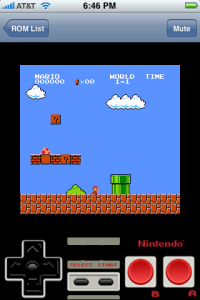
 Nintendo Co., LTD. filed an application on Thursday with the United States Patent & Trademark Office for “Hand-Held Video Game Platform Emulation.”
The patent would cover the use of video game software from the Nintendo Game Boy “on a low-capability target platform,” meaning smartphones, PDAs, and other devices not made by Nintendo.
Emulators allow software such as video games to be run on devices for which they were not originally intended. A popular tool called DOSBox, for example, allows old MS DOS games to run on modern Windows systems.
At face value, the application might make it seem like Nintendo intends to re-release old Game Boy games like Super Mario Land on modern smartphones, much like Square Enix did with the earlier Final Fantasy games.
But with Nintendo still selling old titles through their proprietary systems like the Wii U, the patent likely has another purpose – putting a stop to third party emulators.
Third party emulators of proprietary systems are not strictly illegal in the US. In the case of Sega v. Accolade, for example, the court determined Accolade Inc.’s reverse engineering of the Sega Genesis to create unlicensed games fell under fair use.
The case set a precedent that would later be used in the similar case of Sony Computer Entertainment, Inc. v. Connectix Corporation, which determined that a PlayStation emulator created by reverse engineering the game system did not infringe on Sony’s copyrights.
As a result, the basic functionality of computer software is not protected by copyright laws, and instead can only be protected by trade secrets and patents. Patents like the one Nintendo just filed.
While Nintendo’s patent might be thinking of the company’s intellectual property first, that is not to say that the gaming giant will never venture into the world of mobile games.
Earlier this year, Forbes contributor Eric Kain wrote: “Nintendo could keep exciting new IPs on proprietary hardware exclusively, while still getting Mario into the hands of millions of smartphone and tablet users, like some sort of beneficent gateway drug.”
With the wealth of side-scrolling indie games that try to recapture that mid-1990s feeling, releasing old games on smartphones could be good business for Nintendo.
… We’d like to tell you about our mission and how you can help us fulfill it. SiliconANGLE Media Inc.’s business model is based on the intrinsic value of the content, not advertising. Unlike many online publications, we don’t have a paywall or run banner advertising, because we want to keep our journalism open, without influence or the need to chase traffic.The journalism, reporting and commentary on SiliconANGLE — along with live, unscripted video from our Silicon Valley studio and globe-trotting video teams at theCUBE — take a lot of hard work, time and money. Keeping the quality high requires the support of sponsors who are aligned with our vision of ad-free journalism content.
If you like the reporting, video interviews and other ad-free content here, please take a moment to check out a sample of the video content supported by our sponsors, tweet your support, and keep coming back to SiliconANGLE.






