




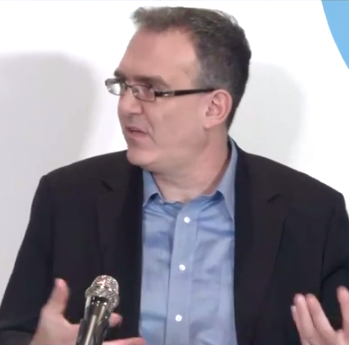
 Network functions virtualization (NFV) is usually discussed in the context of standards and vendor consortia, but according to Saar Gillai of HP, the slow-rolling push to help carriers modernize their infrastructure heralds a much broader shift that could revolutionize the telecommunications industry. The veteran executive recently returned to theCUBE at HP’s Discover conference in Barcelona to share his insights into the tectonic shifts that will define the era of constant connectivity.
“The telcos have built a really good infrastructure in the last 10-15 years; it’s very resilient, but it’s not that flexible,” he said. “It was built to keep the network up, not to provide fast services. ” Gillai, who heads both HP’s cloud business and its newly-minted NFV division, spoke with theCUBE hosts John Furrier and Dave Vellante. “The challenge they have is that now they’re living in a new world where most of the value is extracted out of the network by people running services on top.”
With revenues-per-bit declining while demand for network capacity only increases, Gillai said tapping into the additional revenue to be had higher up the stack is not so much about reaching greener pastures as it is a matter of survival for carriers. To compete against companies already delivering value-added services over their networks today, telcos need a new operations model that can keep up.
Unlike Netflix Inc., however, the typical network operator does not have the luxury of outsourcing operations to a cloud provider provider such as Amazon. The transition instead has to proceed from ground up with the most basic infrastructure building blocks, which is where NFV comes in. That paradigm centers on replacing the expensive dedicated appliances that have traditionally powered core network functions such as security and load balancing with software running on commodity servers and chaining them together programmatically. “It’s almost like when we talked about cloud a few years ago: you assume cost will be reduced, but the value is agility,” Gillai explained. “If all you want to do is reduce costs, there are a lot of easier ways to do it than NFV. NFV is about making your network programmable and rolling out services faster.”
Although it’s becoming increasingly urgent for carriers to diversify their revenue streams, they also have existing subscribers to support, a reality that Gillai said will make the transition to the new way of delivering network services gradual. After all, it’s not only a matter of replacing legacy technology but also the organizational processes that have grown around it, which are potentially just as difficult to change.
“They built whole mechanisms of culture in order to keep the network up and do upgrades and all that stuff,” Gillai highlighted. “Now all of a sudden you have to upgrade your network every few days. Do you think you’re going to do that without changing culture?”
Watch the full interview (18:02)
… We’d like to tell you about our mission and how you can help us fulfill it. SiliconANGLE Media Inc.’s business model is based on the intrinsic value of the content, not advertising. Unlike many online publications, we don’t have a paywall or run banner advertising, because we want to keep our journalism open, without influence or the need to chase traffic.The journalism, reporting and commentary on SiliconANGLE — along with live, unscripted video from our Silicon Valley studio and globe-trotting video teams at theCUBE — take a lot of hard work, time and money. Keeping the quality high requires the support of sponsors who are aligned with our vision of ad-free journalism content.
If you like the reporting, video interviews and other ad-free content here, please take a moment to check out a sample of the video content supported by our sponsors, tweet your support, and keep coming back to SiliconANGLE.






