



 NEWS
NEWS
NEWS
NEWS
NEWS

 Xiaomi Inc., has posted pre-tax revenue of 74.3 billion yuan ($11.97 billion) in 2014 on the back of its mobile shipments increasing 227 percent to 61 million for the calendar year.
The Chinese mobile manufacturer became the world’s third largest smartphone maker in October 2014, behind Samsung Electronics Co., Ltd and Apple Inc., and was named the world’s most valuable startup after raising $1.1 billion on a $45 billion valuation in December.
The company has previously said its goal was to ship 100 million phones in 2015, well up from its figure of 18.7 million in 2013.
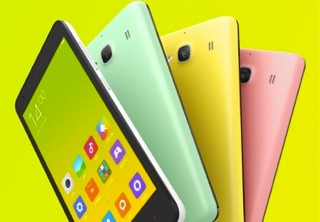
The news comes as the company has launched a new phone, the Redmi 2, a follow-up to its popular and high selling Redmi phone, which led Xiaomi’s surge in sales last year.
The phone offers a Snapdragon 410 1.2GHz quad-core 64-bit processor, 4.7-inch 720p LCD screen, 1 GB of RAM, and a 2200mAh battery.
Users get 8 GB internal storage with the ability to expand via microSD card, an 8 megapixel camera, and the phone runs on 4G networks including FDD-LTE and TDD_LTE, and has support for dual simcards.
It’s not clear which version of Android it will run, but it will likely ship with KitKat 4.4.
The phone will go on sale for 699RMB ($112) January 9th, and will be available in five colors: white, black, yellow, pink, and green.
The new sales figures are remarkable for a company that was founded in 2010 and didn’t sell its first phone until 2011. It also remains a relatively unknown company in the West, as it focuses primarily on selling its mobiles in Asia, and in particular its native China, where it is the number one selling phone manufacturer.
Xiaomi plans in the year ahead to enter new markets, including Brazil, Turkey, Mexico, Thailand, and Russia, and it has been suggested that Xiaomi may become China’s “first global consumer brand.”
Image credit: Xiaomi.
… We’d like to tell you about our mission and how you can help us fulfill it. SiliconANGLE Media Inc.’s business model is based on the intrinsic value of the content, not advertising. Unlike many online publications, we don’t have a paywall or run banner advertising, because we want to keep our journalism open, without influence or the need to chase traffic.The journalism, reporting and commentary on SiliconANGLE — along with live, unscripted video from our Silicon Valley studio and globe-trotting video teams at theCUBE — take a lot of hard work, time and money. Keeping the quality high requires the support of sponsors who are aligned with our vision of ad-free journalism content.
If you like the reporting, video interviews and other ad-free content here, please take a moment to check out a sample of the video content supported by our sponsors, tweet your support, and keep coming back to SiliconANGLE.






