



 NEWS
NEWS
NEWS
NEWS
NEWS


Less than a week after competitor Dato, Inc. (formerly GraphLab, Inc.) raised $18.5 million from investors, Neo Technology, Inc. announced that it has closed $20 million in Series C funding from two new and three current investors. The latest round brings the San Mateo-based startup’s total funding to $45 million.
Although somewhat overshadowed by the feeding frenzy over Hadoop and some well-funded NoSQL peers, graph databases have been enjoying a growth surge in their own right, with Forrester Research forecasting that one-quarter of all enterprises will use them by 2017.
Neo licenses its Neo4J database on an open source license and claims 500,000 downloads since the launch of version 2.0 last year. The company sells an enterprise edition for users who want advanced features like clustering and high-performance caching. Prominent customers include Wal-mart Stores, Inc., eBay, Inc., Intercontinental Exchange, Inc., Hewlett-Packard Co., Deutsche Lufthansa AG, and The National Geographic Society.
Although still a relative newcomer to the data management world, graph databases have attracted attention for their distinctive ability to map relationships in ways that can yield rapid insights for real-time and predictive analytics. While not as fast as relational databases in all operations, graph databases are uniquely well-suited for situations in which the relationship between objects is not fixed.
Frequently deployed in conjunction with Hadoop, they use nodes and properties to eliminate the need for indices. Instead, each element contains pointers to adjacent elements with similar properties. This eliminates the need to traverse tables and provides the fastest connection between two related elements. For example, a node called “Walmart” could be categorized in data sets of retail stores, U.S. companies, large employers and companies that begin with “W.”
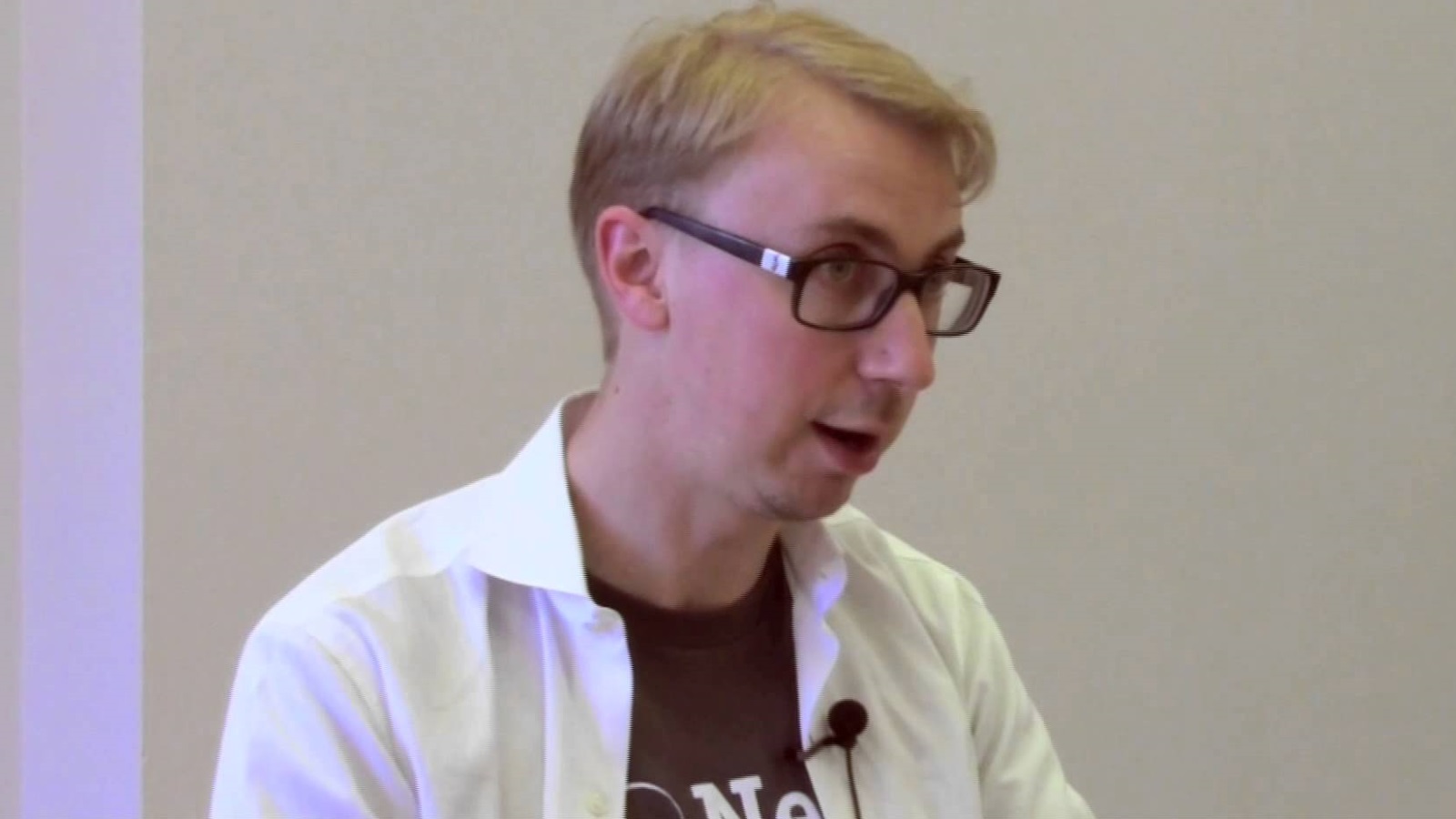
Neo Technology CEO Emil Eifrem said shopping recommendation engines are a perfect use case. “If I buy milk and a science fiction book the database can finds others who have purchased those two items and look for other similarities between them,” he said. Graph databases feature exceptional programmability and speed in certain use cases because of their lack of a rigid data structure or need for an index.
Unlike Dato, which is broadening its focus and re-positioning itself as a learning machine vendor, Neo intends to remain tightly focused on graph databases, Eifrem said. The company was founded in Sweden but moved to Silicon Valley in 2011 to be closer to talent and funding. This latest round would appear to validate the wisdom of that decision. The company also said that veteran European venture capitalist Johan Brenner has joined Neo’s Board of Directors as the company seeks to take advantage of growing investor interest in data management based on relationships.
… We’d like to tell you about our mission and how you can help us fulfill it. SiliconANGLE Media Inc.’s business model is based on the intrinsic value of the content, not advertising. Unlike many online publications, we don’t have a paywall or run banner advertising, because we want to keep our journalism open, without influence or the need to chase traffic.The journalism, reporting and commentary on SiliconANGLE — along with live, unscripted video from our Silicon Valley studio and globe-trotting video teams at theCUBE — take a lot of hard work, time and money. Keeping the quality high requires the support of sponsors who are aligned with our vision of ad-free journalism content.
If you like the reporting, video interviews and other ad-free content here, please take a moment to check out a sample of the video content supported by our sponsors, tweet your support, and keep coming back to SiliconANGLE.






