




 After more than five years of sticking to the same recipe, VCE is finally introducing a new series of converged appliances that will provide the ability to customize the individual building blocks for specific requirements. The launch marks a major evolutionary leap from its current hardware.
The tried-and-tested Vblocks have generated more than a billion dollars in annual revenue as of 2013, which comfortably positions VCE at the top of the converged infrastructure food chain. But the outfit has seen its dominance come under threat lately from rivals such as the recently funded SimpliVity Inc., which are pushing ahead on functionality.
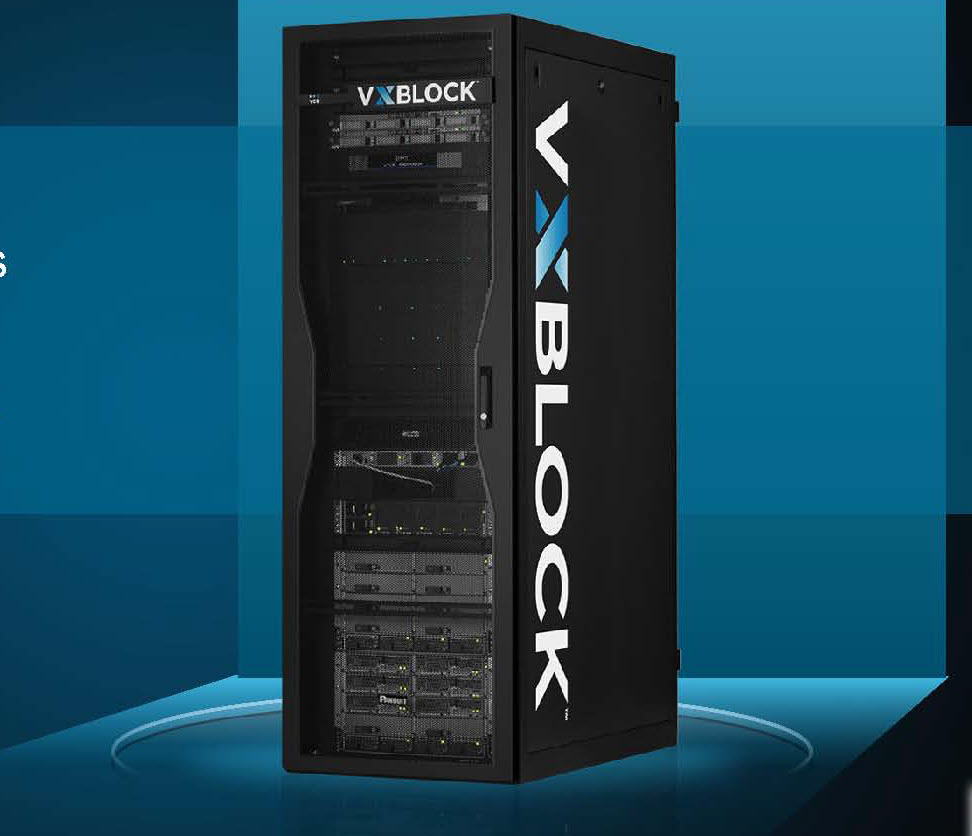
The new VxBlock line is the appliance maker’s comeback. The upcoming systems constitute the cornerstone of a new architecture that promises to provide a scalable environment for running modern workloads such as Hadoop implementations.
Analyzing unstructured information requires a vastly different ratio between the amount of memory and processing power available to the cluster than a conventional business application does, which clashes with the pre-configured nature of converged systems. The new version of VCE’s management software that will ship with VxBlocks and roll out to earlier appliances in conjunction offers a workaround.
VCE Vision Intelligent Operations 3.0 will provide the ability to merge multiple appliances – regardless of the generation – into a single logical building block optimized for the specific needs of an application. That’s the same approach Hewlett-Packard Co. has implemented in its competing converged systems, although in a much narrower form focusing primarily on Hadoop.
Vision 3.0 extends that functionality to other workloads as well and introduces cross-system monitoring capabilities to help administrators keep track of their partitions, which can run alongside individual Vblocks and VxBlocks in the same environment. The software bridges some of the manageability gap with the likes of SimpliVity, but at a cost.
It also blurs the lines with the EVO:Rail series from parent company VMware Inc., which is competing in the same hyper-converged niche. And the similarities don’t end there. Based on VCE’s launch presentation, future VxBlock models could provide a choice of third-party hardware under the hood just as the virtualization giant’s platform does.
That is the most pronounced example yet of the overlap inherent to the unique “federation” strategy of EMC Inc., which owns a majority stake in both VMware and VCE. The situation could create some confusion among customers that the competition may try to exploit, but the storage giant has already proved the model to be effective in the grand scheme of things.
Wikibon analysts Stu Miniman and David Vellante analyze the new VCE offerings in depth in this episode of CUBE Conversations (21:52)
… We’d like to tell you about our mission and how you can help us fulfill it. SiliconANGLE Media Inc.’s business model is based on the intrinsic value of the content, not advertising. Unlike many online publications, we don’t have a paywall or run banner advertising, because we want to keep our journalism open, without influence or the need to chase traffic.The journalism, reporting and commentary on SiliconANGLE — along with live, unscripted video from our Silicon Valley studio and globe-trotting video teams at theCUBE — take a lot of hard work, time and money. Keeping the quality high requires the support of sponsors who are aligned with our vision of ad-free journalism content.
If you like the reporting, video interviews and other ad-free content here, please take a moment to check out a sample of the video content supported by our sponsors, tweet your support, and keep coming back to SiliconANGLE.






