





According to Stanford University, 11,000 iPhone owners signed up for its heart health study using the new Apple ResearchKit, changing the way medical research is achieved. A feat that used to take at least a year and 50 medical research facilities has now been accomplished in just 24 hours. With ResearchKit, Apple is bringing medical research closer to people, and giving researchers a bigger audience to conduct their studies. But what does the easy access to consumers mean for data privacy?
.
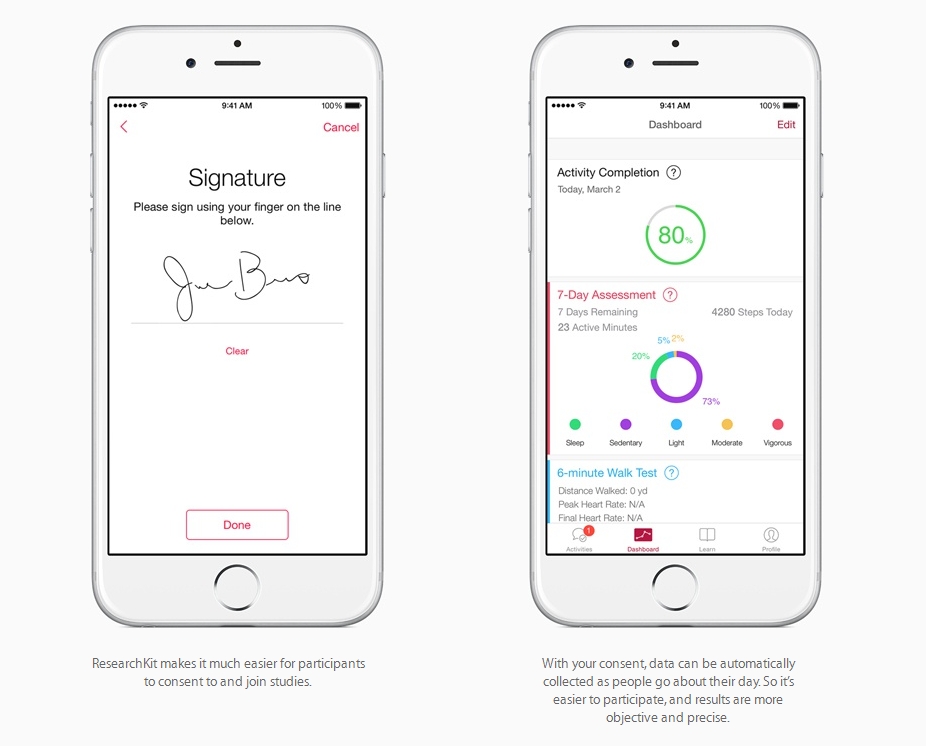
When Apple announced ResearchKit, the company was quick to point out that users will be able to select which studies they want to join and control what information they want to share with researchers. For now, in the case of early ResearchKit program mPower, it collects minimal information from users, but depending on the medical research app and how deeply it is ingrained with HealthKit, the information users share could be accessed by other app makers, not just the medical researchers or Apple itself.
Lying to your doctor is huge no-no, but people still do it. If people can easily lie to their doctors, what makes it different when a medical researcher asks you the same questions on a mobile device?
Some may argue that people tend to be more honest when not faced with the person asking the questions. But still, people can easily lie about the simple things, such as if they really are participants from the U.S. or of they are of legal age. This can lead to bad data being collected and can impact the overall result of the study.
David Haddad, cofounder and executive director of Open mHealth, believes that utilizing data measured automatically, such as those generated by sensors, are more accurate than just simply relying on data being filled out and submitted by participants.
Time will tell how other data sources can supplement volunteered data from research participants, and what role mobile devices will play in such efforts.
Informed consent is crucial for any medical study or research, as this is the part that informs a participant what’s in store for them during the study. It is usually done in person, one-on-one, but with ResearchKit, this stage has been reinvented. Some apps show participants images of what they can expect with a given study, or give a quiz to test their understanding of the study and require the participant to get a perfect score to be eligible to proceed. The problem with this type of setup is that it doesn’t leave users an avenue to ask questions so they can clarify things that aren’t clear to them.
“We haven’t yet cracked how to ask questions yet,” Sage Bionetwork’s Chief Commons Officer John Wilbanks told The Verge. “That’s something that we are going to try to figure out next; for instance, can we come with some sort of peer-to-peer system where people can ask questions.”
… We’d like to tell you about our mission and how you can help us fulfill it. SiliconANGLE Media Inc.’s business model is based on the intrinsic value of the content, not advertising. Unlike many online publications, we don’t have a paywall or run banner advertising, because we want to keep our journalism open, without influence or the need to chase traffic.The journalism, reporting and commentary on SiliconANGLE — along with live, unscripted video from our Silicon Valley studio and globe-trotting video teams at theCUBE — take a lot of hard work, time and money. Keeping the quality high requires the support of sponsors who are aligned with our vision of ad-free journalism content.
If you like the reporting, video interviews and other ad-free content here, please take a moment to check out a sample of the video content supported by our sponsors, tweet your support, and keep coming back to SiliconANGLE.






