



 NEWS
NEWS
NEWS
NEWS
NEWS

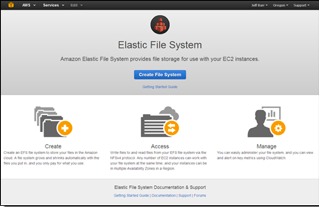 Amazon Inc. has announced the launch of its Amazon Elastic File System (EFS,) their newest service for clients of Amazon Web Services (AWS.)
Amazon’s EFS is a file storage service for Amazon Elastic Compute Cloud (Amazon EC2) instances, that allows users to create and configure file systems quickly and easily.
Storage capacity is elastic, growing and shrinking automatically as users add and remove files, so applications have on demand storage as it’s needed.
Amazon EFS supports the Network File System version 4 (NFSv4) protocol, meaning that the applications and tools already used by many today will work with Amazon EFS, allowing developers to simply mount and manage them with any standard file system tool.
As well, multiple Amazon EC2 instances can access an Amazon EFS file system at the same time, providing a common data source for workloads and applications running on more than one instance.
The platform is entirely SSD-based, and is designed to provide the throughput, IOPS, and low latency needed for the broad range of workloads often demanded by AWS customers.
Amazon’s Jeff Barr explained in a blog post the sorts of people they were hoping to attract with the new service:
We expect to see EFS used for content repositories, development environments, web server farms, home directories, and Big Data applications, to name just a few. If you’ve got the files, we’ve got the storage!
Barr added that Amazon EFS is designed to support the security requirements of large, complex organizations, with users being able to use IAM to grant access to the EFS APIs, along with VPC security groups to control network access to file systems.
There’s no firm date on when Amazon EFS will be fully available, with the site for the service simply stating that it’s “coming soon.” AWS customers are able to sign up for a preview of the service at the time of writing.
Price wise, like most good AWS product offerings, Amazon EFS comes in at the low figure of $0.30 per gigabyte per month, and naturally users are only charged for the amount of storage they actually use.
… We’d like to tell you about our mission and how you can help us fulfill it. SiliconANGLE Media Inc.’s business model is based on the intrinsic value of the content, not advertising. Unlike many online publications, we don’t have a paywall or run banner advertising, because we want to keep our journalism open, without influence or the need to chase traffic.The journalism, reporting and commentary on SiliconANGLE — along with live, unscripted video from our Silicon Valley studio and globe-trotting video teams at theCUBE — take a lot of hard work, time and money. Keeping the quality high requires the support of sponsors who are aligned with our vision of ad-free journalism content.
If you like the reporting, video interviews and other ad-free content here, please take a moment to check out a sample of the video content supported by our sponsors, tweet your support, and keep coming back to SiliconANGLE.






