







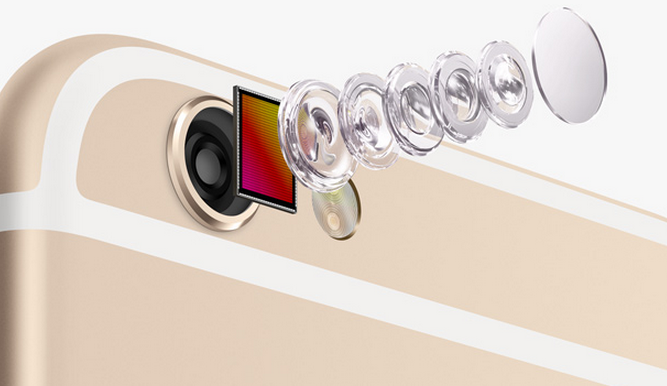
Apple has bought Israeli camera-technology company LinX Computational Imaging, Ltd. for a reported $20 million. The Wall Street Journal sought to confirm the acquisition and received Apple’s boilerplate response: “Apple buys smaller technology companies from time to time, and we generally do not discuss our purpose or plans.”
LinX develops miniature multi-aperture cameras for use in mobile handsets, tablets and ultrabooks. LinX’s cameras are slimmer than competing offerings, allowing handset manufacturers to use them in ever-thinner devices. The company’s technology also makes it possible to refocus images after the fact and to capture 3D images.
“The camera modules are nearly half the height of a standard mobile camera and are capable of creating stunning color images and high-accuracy depth maps,” LinX said in a statement.
LinX was founded in 2011 by Ziv Attar and Andrey Tovchigrechko. Prior to founding LinX, Attar worked for Israeli defense company Rafael Advanced Systems, Ltd. as a senior optics specialist and Tovchigrechko headed up a team of algorithm developers at Samsung Electronics Co., Ltd.
This is the latest of a series of Israeli companies acquired by Apple. In 2011, the iPhone maker bought Anobit Technologies, Ltd. for its flash-memory technology, and then in 2013 it bought PrimeSense, Ltd. for a reported $345 million. PrimeSense developed the 3D image technology used in Microsoft’s Kinect game controller for Xbox.
According to Apple CEO Tim Cook, Israel is the company’s largest research and development hub outside of the U.S. with more than 700 employees based in the country. Included in that number are employees Apple hired on from the Israeli-based chip-design division of Texas Instruments, Inc. that closed down in 2013.
As pointed out by MacRumors, Apple’s acquisition of LinX could lead to significant improvements to cameras in future iOS devices.
Apple’s iPhone 6 range is the company’s thinnest yet. Unfortunately, this led to the protruding camera on the back. With technology from LinX onboard, Apple will be able to incorporate thinner cameras into future iPhone that produces higher-quality images.
By combining LinX’s proprietary algorithms and its mobile-ready multi-aperture camera, which can capture high-quality images at very low light levels and keep exposure times short at normal indoor light levels, future iPhones may be able to capture SLR-quality images.
It’s not clear what Apple’s plans for LinX are nor when we could reasonably expect to see the technology incorporated in iOS-device cameras; however, rumors have suggested that Apple could introduce its “biggest camera jump ever” in the next-generation iPhone.
That rumor may have been the prelude to Apple acquiring LinX.
Support our mission to keep content open and free by engaging with theCUBE community. Join theCUBE’s Alumni Trust Network, where technology leaders connect, share intelligence and create opportunities.
Founded by tech visionaries John Furrier and Dave Vellante, SiliconANGLE Media has built a dynamic ecosystem of industry-leading digital media brands that reach 15+ million elite tech professionals. Our new proprietary theCUBE AI Video Cloud is breaking ground in audience interaction, leveraging theCUBEai.com neural network to help technology companies make data-driven decisions and stay at the forefront of industry conversations.




