





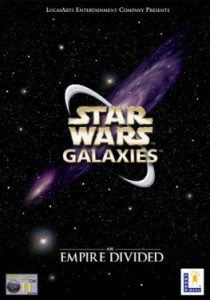
While the “New Game Enhancement” update is considered by many to be the death blow that eventually killed Star Wars Galaxies, former creative director Raph Koster says the seeds for the game’s destruction were planted only months after its release with the introduction of Holocrons, items that gave players information on how to access to the incredibly rare Jedi skill tree.
“After Holocrons, the game was dead; it was just that nobody knew it yet,” Koster wrote in a recent blog post. “Pretty much every single subsequent change can be traced back to that day. All the panicky patches, the changes, the [Combat Upgrade] and the [New Game Enhancement], were all about trying to get the sub curve back on a growth trajectory.”
Jedi characters were unlocked when players reached the master level of four randomly determined professions. Initially, players were not told what professions were chosen or even when they had successfully completed one. The idea was to make Jedi rare and to keep players from figuring out the system used to unlock them. According to Koster, they predicted it would take years for the first Jedi character to be unlocked.
But when LucasArts marketing told the developer “we need a Jedi by Christmas” and to “drop hints,” holocrons were added that would inform players of the next skill they needed to complete.
“The problem is obvious,” Koster wrote. “As soon as three people all have gotten a hint that what they need is to master a specific skill box, the secret was out.”
Jedi characters went from being seemingly random gifts to tedious yet attainable goals. Koster explains that once people knew how to unlock Jedi, they felt obligated to master skills that they considered boring just to access a game feature.
“It seemed like a cruelly mechanistic trick, after the dreams [the players] had had; a system that worked better when nobody knew how it worked,” Koster wrote. “And it had worked, for a while. People dreamed of Jedi, and were content, and had fun. They were attainable, powerful, and absent, and the rat race wasn’t a factor.”
He added, “The genie was out of the bottle, though: Jedi was a thing for grinders and achievement-mad powergamers, and a little quest chain was never going to stop them. They were everywhere.”
… We’d like to tell you about our mission and how you can help us fulfill it. SiliconANGLE Media Inc.’s business model is based on the intrinsic value of the content, not advertising. Unlike many online publications, we don’t have a paywall or run banner advertising, because we want to keep our journalism open, without influence or the need to chase traffic.The journalism, reporting and commentary on SiliconANGLE — along with live, unscripted video from our Silicon Valley studio and globe-trotting video teams at theCUBE — take a lot of hard work, time and money. Keeping the quality high requires the support of sponsors who are aligned with our vision of ad-free journalism content.
If you like the reporting, video interviews and other ad-free content here, please take a moment to check out a sample of the video content supported by our sponsors, tweet your support, and keep coming back to SiliconANGLE.








