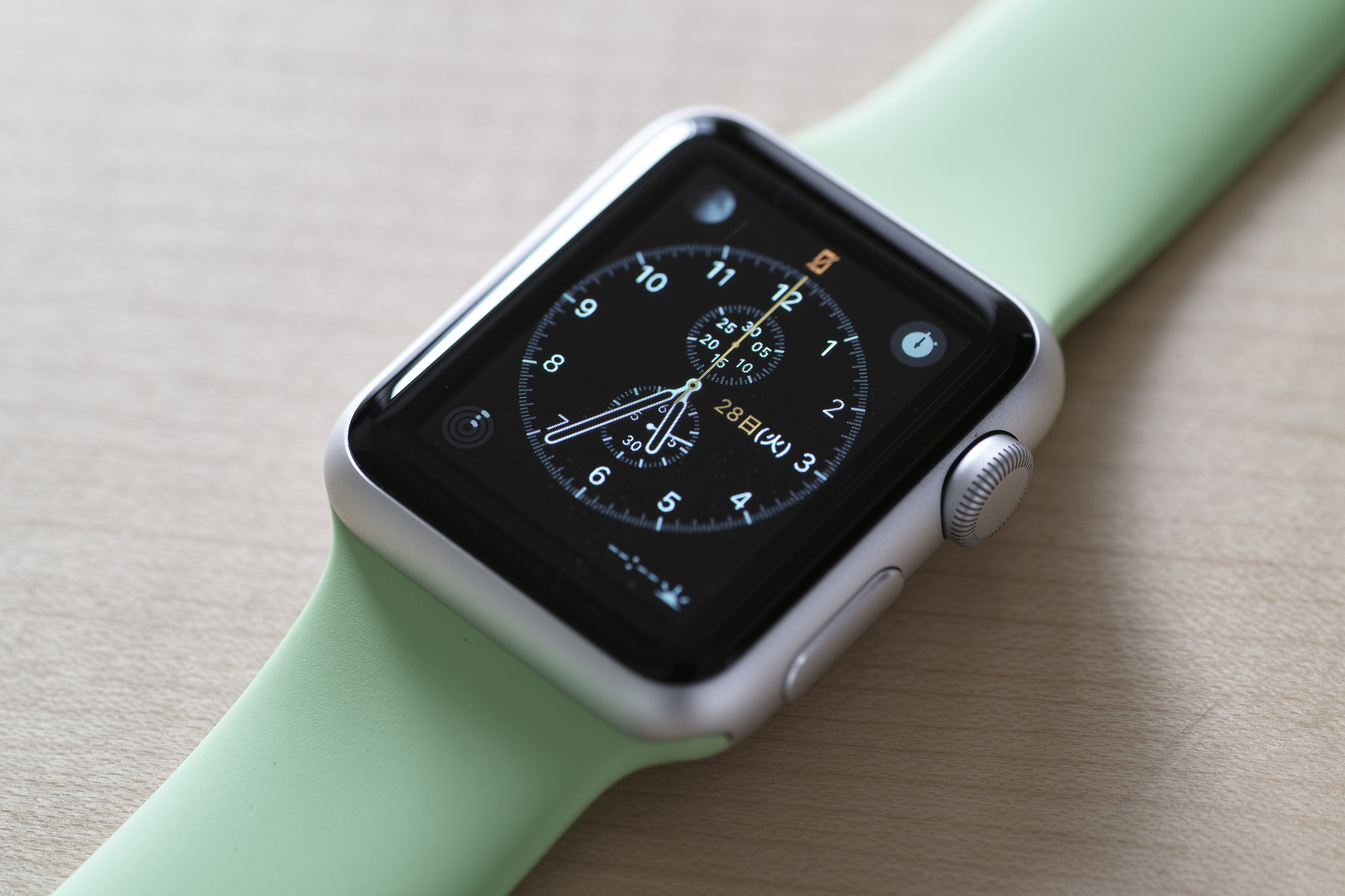







During Apple’s quarterly earnings call on Monday company executives highlighted that profit margins on the new Apple Watch are likely to be lower than the company average. Now a cost analysis released Thursday indicates that parts and manufacturing costs of the Apple Watch make up a smaller share of the retail price than other Apple mobile devices.
IHS Technology and its Teardown Mobile Handsets Intelligence Service estimated the cost of parts and manufacturing for a 38-millimeter Apple Watch Sport total around $83.70, or 24 percent of the manufacturer’s suggested retail price (MSRP) of $349.
Other Apple iDevices, like the iPhone 6, examined by IHS had a cost to MSRP ratio between 29 and 38 percent.
According to the HIS breakdown, the bill of materials for the Apple Watch Sport adds up to $81.20 with the remaining $2.50 going to manufacturing costs.
“It is fairly typical for a first-generation product rollout to have a higher retail price versus hardware cost,” noted Kevin Keller, senior principal analyst-materials and cost benchmarking services for IHS Technology in the report. “While retail prices always tend to decrease over time, the ratio for the Apple Watch is lower than what we saw for the iPhone 6 Plus and other new Apple products, and could be of great benefit to Apple’s bottom line if sales match the interest the Apple Watch has generated.”
The teardown revealed a number of new features and manufacturing methods used in the Apple watch Sport, including a Pulse Oximeter, Force Touch sensor, “Taptic Engine” feedback, encapsulated modular printed circuit board (PCB) assembly and stacked-die integrated circuits (IC).
“While these features have been promoted by Apple and none are necessarily revelatory,” Keller added. “It is noteworthy that many features are appearing for the first time – in combination – in one device. It could be a bellwether for other future Apple products.”
The report also detailed the individual parts and their manufacturers. Some of the highlights include LG’s plastic OLED display with a touchscreen overlay supplied by TPK Holding Co., a touchscreen controller from Analog Devices Inc., a memory chip from Toshiba Corp. and Micron Technology Inc. and a Bluetooth controller from Broadcom Corp. the S1 processor is of course manufactured by Apple itself.
It is worth noting that the IHS cost breakdown did not include logistics, capital, overhead, research and development, software, intellectual property and other supply chain costs. All costs the company needs to recoup if its new product category is to be profitable in the long run.
Support our mission to keep content open and free by engaging with theCUBE community. Join theCUBE’s Alumni Trust Network, where technology leaders connect, share intelligence and create opportunities.
Founded by tech visionaries John Furrier and Dave Vellante, SiliconANGLE Media has built a dynamic ecosystem of industry-leading digital media brands that reach 15+ million elite tech professionals. Our new proprietary theCUBE AI Video Cloud is breaking ground in audience interaction, leveraging theCUBEai.com neural network to help technology companies make data-driven decisions and stay at the forefront of industry conversations.





