



 NEWS
NEWS
NEWS
NEWS
NEWS

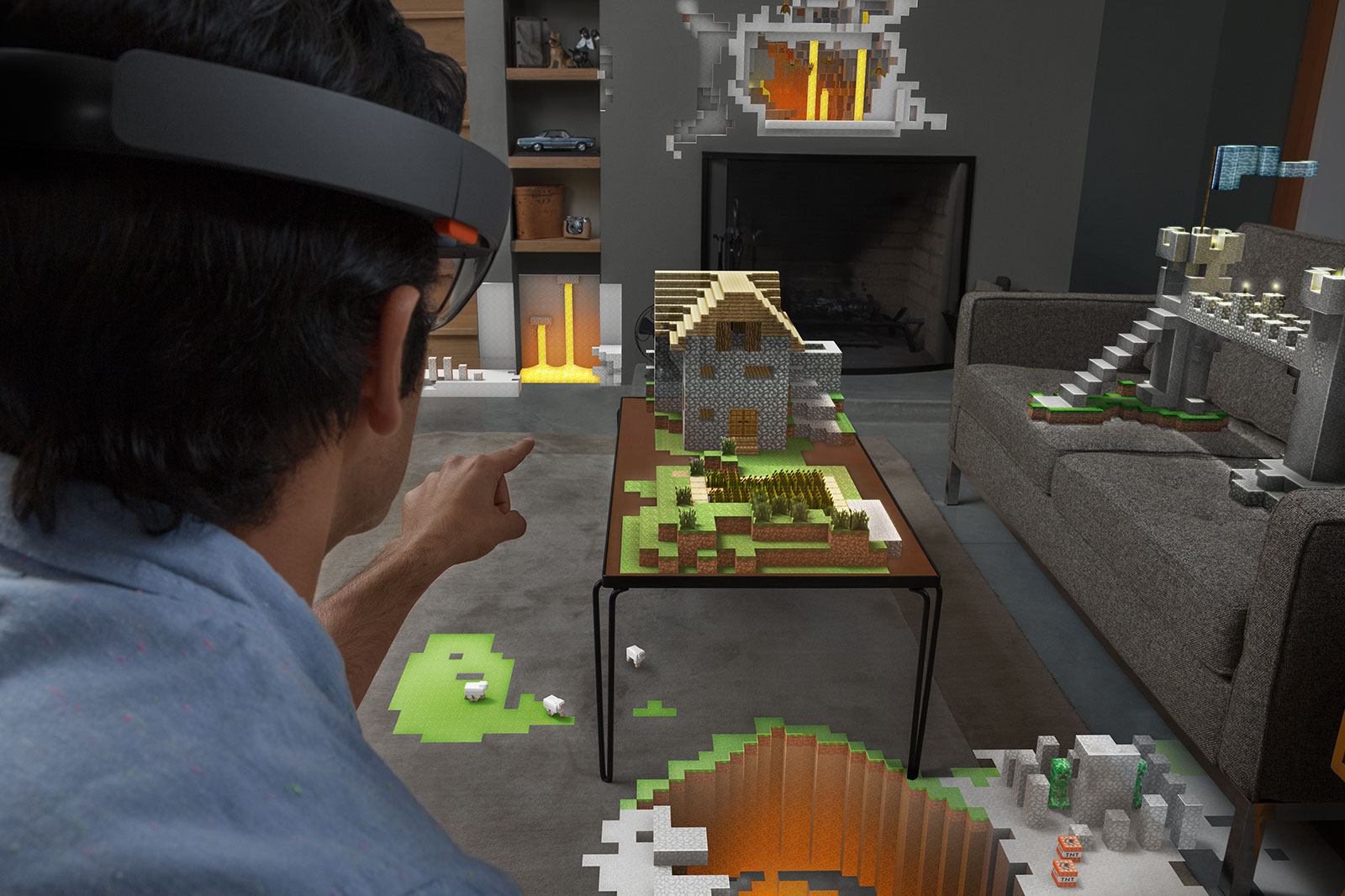
Microsoft showed off its augmented reality headset to good effect at Build 2015 in San Francisco, wooing the crowds with demonstrations of how your living room can be turned into a virtual holographic work, and play space, replete with virtual screens paintings the house walls – including a Skype widget decorating one wall – and all kinds of information popping up into thin air.
Of note was the educational (teaching anatomy) capabilities of the headset, which was presented in the form of a demo of a virtual human body being seen inside and out, something Microsoft had created with Case Western University’s Cleveland Clinic. The impression left on the audience was how such augmented reality learning could transform education, in various fields of study. And users in any location, be it London, or New York, can collaborate in the same virtual space once they’ve donned their magic specs.
HoloLens chief, Alex Kipman, discussed the Windows Holographic Platform, which will give developers the chance to create their own Windows 10 apps for HoloLens. All Windows 10 universal apps will work with the headset, noted Kipman, adding, “Everything you’ve seen here today is a universal Windows app.”
Besides productivity capabilities we also got to see how much fun you can have with the headset. In one part of the demo, Darren, the man wearing the headset, brought up a window of a virtual television, and then proceeded to demonstrate how it could be resized and moved around the room with hand and voice gestures. In another demo we saw how the Internet of Things can work with the headset. The presentation saw a robot, given the name B15, interacting with the person wearing HoloLens.
HoloLens came last, but certainly not least, in the three hour keynote presentation, showing that Microsoft has created something pretty special. Kipman explained to developers that they too could be creating uses for the device, and this time Redmond had 200 headsets which were available for attendees to try out. Microsoft does however seem to be keeping this science fiction-esque gadget under wraps, at least in practical terms, as we still don’t know how much it will cost, or when it will become available to the public. HoloLens, again, has caused a stir, a glimpse into the future, and even the most skeptical of people would struggle not to be impressed by this gadget.
… We’d like to tell you about our mission and how you can help us fulfill it. SiliconANGLE Media Inc.’s business model is based on the intrinsic value of the content, not advertising. Unlike many online publications, we don’t have a paywall or run banner advertising, because we want to keep our journalism open, without influence or the need to chase traffic.The journalism, reporting and commentary on SiliconANGLE — along with live, unscripted video from our Silicon Valley studio and globe-trotting video teams at theCUBE — take a lot of hard work, time and money. Keeping the quality high requires the support of sponsors who are aligned with our vision of ad-free journalism content.
If you like the reporting, video interviews and other ad-free content here, please take a moment to check out a sample of the video content supported by our sponsors, tweet your support, and keep coming back to SiliconANGLE.






