



 NEWS
NEWS
NEWS
NEWS
NEWS

If you look at financial results alone, VMware, Inc. is in great shape. The company reported another strong quarter two weeks ago and said its new initiatives are firing on all cylinders.
So why are so many people worried about VMware? It boils down to the question of whether it’s a one-trick pony. Sure, the company enjoys an unquestioned leadership position in its core server virtualization market with vSphere, but what happens when the pace of adoption invariably slows?
Wikibon analyst Stu Miniman believes there is good reason to be concerned about VMware’s long-term prospects. “One of the questions we’ve talked about for years is what percentage of workloads are going to be virtualized?” He said. “I wonder if we’ve reached the saturation point.”
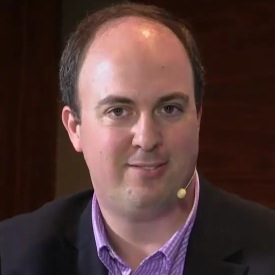
Wikibon analyst Stu Miniman
There certainly are alternatives. Many people point to Docker, Inc.’s Docker container technology, as well as similar offerings from a growing legion of competitors, as a threat to the whole virtualization market. Docker is a potential problem, Miniman says, but people are overlooking an even bigger competitive threat: Microsoft.
“What’s inside of most virtual machines today is Windows stuff,” the analyst said. “Microsoft has closed the gap on Hyper-V. They realized that they let VMware suck up too many dollars and can win that back with a good competitive hypervisor, which happens to be free.”
Microsoft has another edge in the strength of its Azure cloud platform, which is number two in the public cloud infrastructure market. VMware’s vCloud Air isn’t considered a serious challenger at this point. “Microsoft has a better position and a better channel,” Miniman said. “If I’m going to modernize an application, make it cloud-native, why would I want VMware underneath that?”
Open source is another weak point for VMware, and there, again, Microsoft is the surprise threat. “I’m shocked to say that Microsoft is more open than VMware is today,” Miniman said, noting that Microsoft’s Hyper-V supports an impressive assortment of operating systems. There’s also competition from KVM, an open source hypervisor that will naturally appeal to Linux denizens.
VMware’s open source position has actually been hobbled by its sibling, Pivotal Software, Inc., which spun out of parent EMC as an open-source foundry. “The developers who were focused on open source all went to Pivotal,” Miniman observed.
VMware’s biggest assets, outside of its market share, are strong management, good products and loyalty among the large number of IT professionals who cut their virtualization teeth on vSphere. But competition is mounting and VMware’s new initiatives in areas like software-defined data center, hybrid cloud, open source and desktop-as-a-service are still unproven.
There are also growing concerns about the value of virtualization in reducing the stubbornly high costs of IT infrastructure. “IT spends 70 percent of the budget running the business. Server virtualization did not move the needle at all on that,” Miniman asserted. “It consolidated servers, but broke the storage and the network. It created a new silo.” Enterprises need an orchestration layer that harmonizes all of their virturalized assets. With no clear leader in that market, it’s anybody’s guess where that solution will come from.
Virtualization introduced a valuable layer of abstraction that increased server utilization but didn’t reduce server overhead, Miniman said. In short, there’s plenty of work still to be done.
Image via Pixabay
… We’d like to tell you about our mission and how you can help us fulfill it. SiliconANGLE Media Inc.’s business model is based on the intrinsic value of the content, not advertising. Unlike many online publications, we don’t have a paywall or run banner advertising, because we want to keep our journalism open, without influence or the need to chase traffic.The journalism, reporting and commentary on SiliconANGLE — along with live, unscripted video from our Silicon Valley studio and globe-trotting video teams at theCUBE — take a lot of hard work, time and money. Keeping the quality high requires the support of sponsors who are aligned with our vision of ad-free journalism content.
If you like the reporting, video interviews and other ad-free content here, please take a moment to check out a sample of the video content supported by our sponsors, tweet your support, and keep coming back to SiliconANGLE.






