



 NEWS
NEWS
NEWS
NEWS
NEWS

Capriza, Inc. has enhanced its mobile app customization suite with improved usability, speed and personalization.
The company, which has raised more than $50 million from a blue-chip list of investors, has a novel approach to making enterprise applications more usable on mobile devices. It deploys a virtual browser in the cloud to act as an intermediary between data, screens and interactions on the phone or tablet and back-end application.
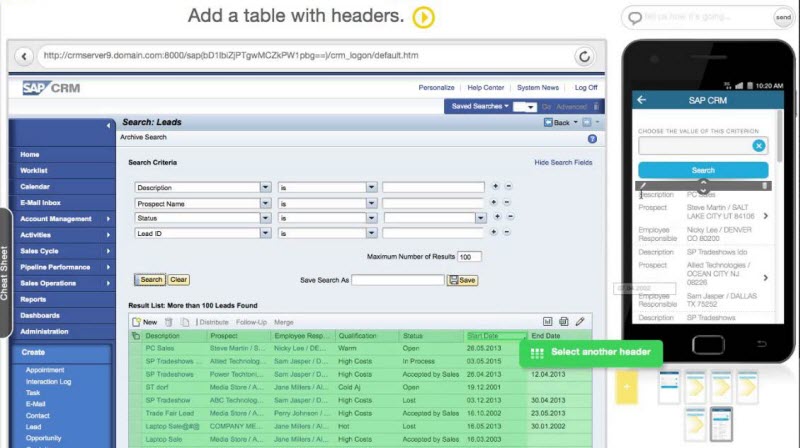
This enables mobile apps called “Zapps” to be quickly created and customized to the needs of individual users. Zapps are essentially skins that overlay a cloud application and deliver a specified workflow and set of screens. For example, field sales representatives can have their CRM mobile apps display only records of customers in their territory. Instead of pinching and scrolling their way through pre-responsive-design Web pages, the app can take them directly to the screens they use most often. Data from the host can also be combined with local apps so that, for example, a customer address can launch a map and driving directions on the mobile device.
The key is the cloud virtual browser, which intercepts exchanges with the mobile client and translates them to the appropriate format. Apps are designed via a drag-and-drop interface that can be used to grab data from the host and build mobile screens interactively. Workflows can also be tuned to the individual user.
Capriza can work with both legacy internal and SaaS systems, according to Ty Lim, vice president of marketing. That’s important, he said, because even born-on-the-cloud SaaS vendors often deliver poor mobile experiences to their users. “Sales executives don’t use Salesforce One,” he said of Salesforce.com, Inc.’s mobile platform.
Lim said even native mobile apps often require users to navigate unnecessary screens and menus to get to their destination. Capriza can overlay those mobile apps with a navigation skin that bypasses many of those intermediate steps. The mobile interface is rendered in XML, and no data is stored locally. “If you terminate an employee, permission is automatically revoked at the app level,” he said.
Enhancements in the new release include more personalization options, templates for common application types, new workflow options in the designer and performance improvements enabled by caching on the cloud host. The software is licensed on a per-seat basis.
… We’d like to tell you about our mission and how you can help us fulfill it. SiliconANGLE Media Inc.’s business model is based on the intrinsic value of the content, not advertising. Unlike many online publications, we don’t have a paywall or run banner advertising, because we want to keep our journalism open, without influence or the need to chase traffic.The journalism, reporting and commentary on SiliconANGLE — along with live, unscripted video from our Silicon Valley studio and globe-trotting video teams at theCUBE — take a lot of hard work, time and money. Keeping the quality high requires the support of sponsors who are aligned with our vision of ad-free journalism content.
If you like the reporting, video interviews and other ad-free content here, please take a moment to check out a sample of the video content supported by our sponsors, tweet your support, and keep coming back to SiliconANGLE.






