



 NEWS
NEWS
NEWS
NEWS
NEWS

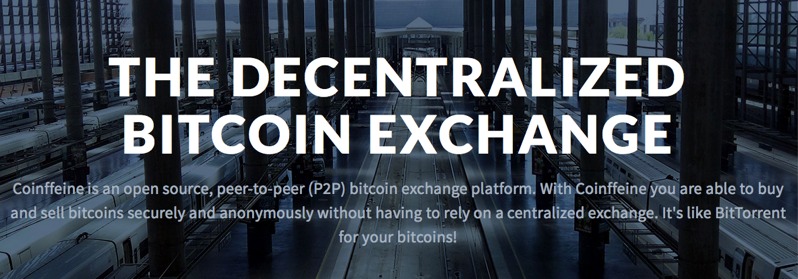
Decentralized peer-to-peer (P2P) Bitcoin exchange Coinffeine S.L. officially launched in beta Tuesday, offering exchange services to over 70 countries.
Billed as the world’s first decentralized Bitcoin exchange, Coinffeine’s founders describe it as “BitTorrent for Bitcoin” in that it is completely distributed, just like BitTorrent, along with all the benefits that provides.
Top of the list when it comes to benefits is privacy, with the platform P2P providing only a very limited disclosure of personal information (a users’ payment processor account so the money can be transferred) with the person a Coinffeine user is doing the exchange with.
“You are always in control of your Bitcoins, and your trusted payment processor of choice is in control of your local currency,” the company notes.
Coinffeine is said to offer a user experience that is similar to traditional exchanges, but utilizes local payment processors, such as PayPal, to manage fiat money, complete with a desktop application that allows users to manage their own Bitcoins without ever having to lose control over them at any given time.
“Not having to identify users or enforce KYC laws has allowed us to design a much more scalable exchange model,” Coinffeine Chief Executive Officer Alberto Gómez Toribio said in a blog post. “But what is even more interesting, is the user experience we offer. Coinffeine is like BitTorrent. You just download it, you connect your OKPAY account, or PayPal in the future, and use it.”
PayPal is mentioned by the company but is not currently available, with only Russian payment service OKPAY being available at launch, but the company hopes to add support for additional payment options in the future.
While the idea of a decentralized Bitcoin exchange is a good one, and there’s a lot to like about what Coinffeine is offering, the decentralized nature of it has to come with some sort of legal risks over time.
The company can claim all it wants that because it is decentralized and transactions are all P2P, they’re not responsible or accountable for them, but when nefarious bad actors start using the service to launder Bitcoin, and they will, the defense of “we don’t control user transactions” will unlikely cut it with the various law enforcement agencies in the United States.
That said, Coinffeine does come with some impressive backing, having been funded by Spain’s Bankinter bank and the law firm Abanlex, the latter being famous for being the legal team that won the “Right to be forgotten” lawsuit against Google in Europe, so maybe legally, going forward, they may be completely fine.
… We’d like to tell you about our mission and how you can help us fulfill it. SiliconANGLE Media Inc.’s business model is based on the intrinsic value of the content, not advertising. Unlike many online publications, we don’t have a paywall or run banner advertising, because we want to keep our journalism open, without influence or the need to chase traffic.The journalism, reporting and commentary on SiliconANGLE — along with live, unscripted video from our Silicon Valley studio and globe-trotting video teams at theCUBE — take a lot of hard work, time and money. Keeping the quality high requires the support of sponsors who are aligned with our vision of ad-free journalism content.
If you like the reporting, video interviews and other ad-free content here, please take a moment to check out a sample of the video content supported by our sponsors, tweet your support, and keep coming back to SiliconANGLE.






