



 NEWS
NEWS
NEWS
NEWS
NEWS

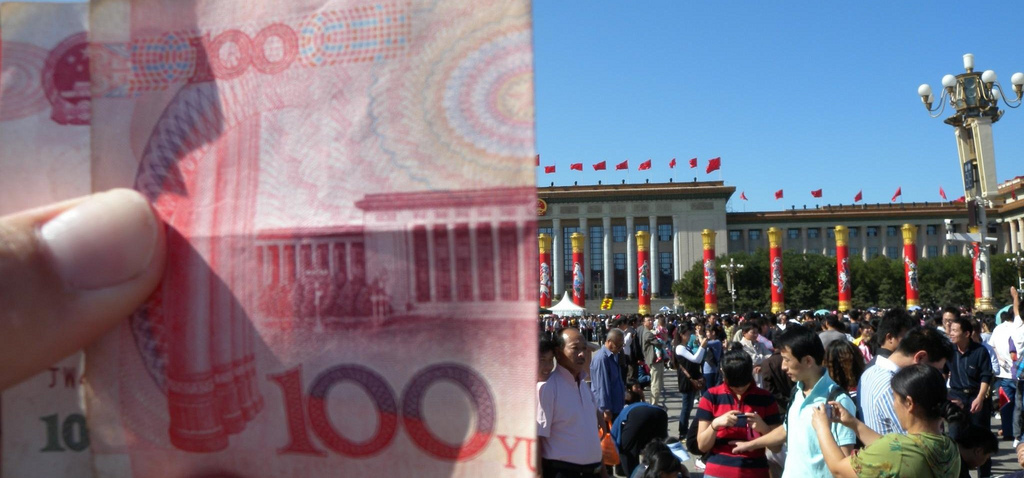
Stock in tech giant Apple, Inc. dropped 5.2 percent in trading Tuesday following a devaluation of the Renminbi (RMB) by the Chinese Government.
The People’s Bank of China, which sets the exchange rate for the currency, cut the valuation of the RMB by 1.9 percent against the U.S. Dollar in what it called a “one time adjustment” in an effort to stimulate the local economy and exports, which while still growing strongly, are growing at much lower rates than has been the case in over a decade.
The move to cut the exchange rate of the RMB means that imported items into China will cost more in the currency while exports will cost less, and while on paper a relatively small amount, the change particularly affects companies that have a large exposure to the Chinese mainland market, and that’s where Apple comes into the picture.
China accounts for 27 percent of Apple sales globally and is the second largest market for the company outside of The Americas (which includes the United States); the change in the valuation of the RMB means that the cost of iPhone’s in China will increase in line with that change, and given it’s already priced at the high end of the market in a country that is best represented by an emergent middle class that isn’t rich by Western standards, that ultimately may hurt sales, at least that’s what the market was thinking when it was selling off Apple stock.
The latest decline in the price of Apple shares has seen the company, once touted as likely to be the first company to reach a $1 trillion market cap, go backwards this year as the bubble expectations of 2014 have given way to reality, particularly given the failure of the Apple Watch.
Apple’s highest share price in the last 52 weeks was $134.54 on a market cap of $764.2 billion, whereas stock in APPL today sits at $113.49 valuing the company at $647.20, meaning that since April this year Apple has lost over $100 billion in value for its shareholders.
While there have been some bright spots for Apple in the last 12 months, particularly the popularity of the iPhone 6 and 6 plus which drove growth in its home market in the United States, the company faces further uphill battles in foreign markets not just as in this case a drop in the valuation of the RMB, but due to the ever-increasing strength on the United States dollar against most global currencies, which continue to drive the price of Apple products north while making products from competitors far more affordable, and therefore appealing.
Apple stock traded up ever so slightly in after-hours trading by 0.33 percent to $113.86.
… We’d like to tell you about our mission and how you can help us fulfill it. SiliconANGLE Media Inc.’s business model is based on the intrinsic value of the content, not advertising. Unlike many online publications, we don’t have a paywall or run banner advertising, because we want to keep our journalism open, without influence or the need to chase traffic.The journalism, reporting and commentary on SiliconANGLE — along with live, unscripted video from our Silicon Valley studio and globe-trotting video teams at theCUBE — take a lot of hard work, time and money. Keeping the quality high requires the support of sponsors who are aligned with our vision of ad-free journalism content.
If you like the reporting, video interviews and other ad-free content here, please take a moment to check out a sample of the video content supported by our sponsors, tweet your support, and keep coming back to SiliconANGLE.






