



 NEWS
NEWS
NEWS
NEWS
NEWS

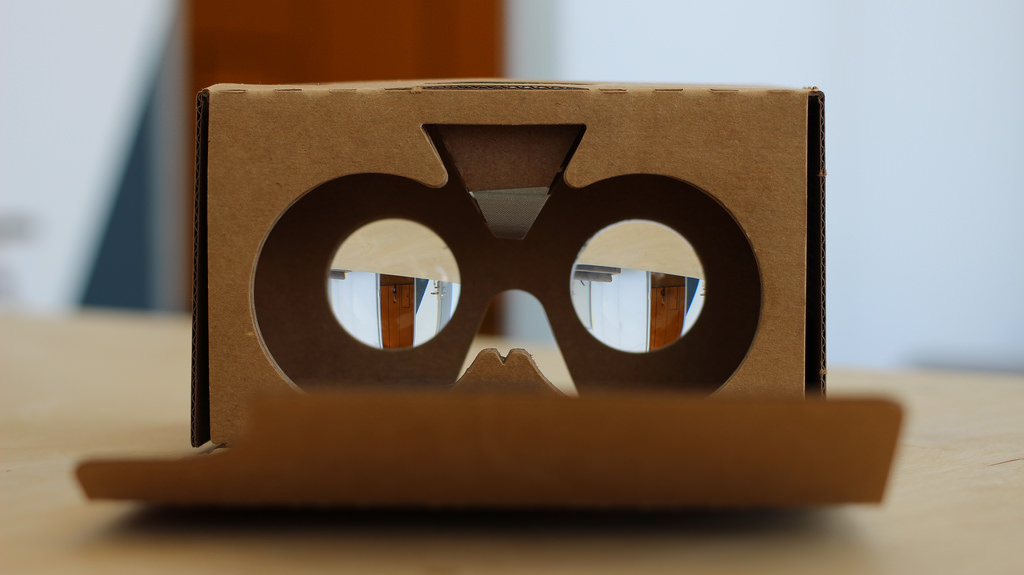
While companies like Valve Corp and Oculus VR are touting the power of their respective Virtual Reality devices, Google went in the complete opposite direction when it released Google Cardboard, a specification for VR “devices” that are essentially a cardboard box specifically designed to hold a smartphone in front of your eyes. They are basically one notch above taping your smartphone to your face.
It may not be the bleeding edge VR system gamers have been dreaming of, but Noah Falstein, Google’s chief game designer, says that there is a good reason for game studios to consider the limitations of Google Cardboard when designing games for VR.
“Because you need to experiment I strongly suggest you start simple – and I’m not making a pitch for Google – but Google Cardboard,” Falstein told GamesIndustry.biz. “Because it is in many ways the lowest common denominator, not just the power of the system because some phones are quite good, but having one button that you can’t even activate incredibly quickly, that is the lowest common denominator in gaze and interface.”
He added, “And if you can make it work on Cardboard then it’s actually quite easy to port it not just to other VR systems but if you want to make a game that is on both VR and Android, for example, it’s a very quick way to go and not limit your market to the relatively smaller number of VR units out there.”
According to Falstein, VR offers plenty of new capabilities for game designers, but just because you can do something doesn’t mean you should, especially if it could result in your customers huddled on the floor while violently puking their guts up.
“Lots of concerns about moving around, even if you can rotate I would recommend not doing it, not forcing somebody to stand up, not to get into an office chair that can swivel is really a good idea,” he said. “And if you get several of those things wrong or worse you mix them up in different ways that’s when you get into trouble with people having sensory problems, not being able to place it in depth or even possibly getting motion sickness.”
… We’d like to tell you about our mission and how you can help us fulfill it. SiliconANGLE Media Inc.’s business model is based on the intrinsic value of the content, not advertising. Unlike many online publications, we don’t have a paywall or run banner advertising, because we want to keep our journalism open, without influence or the need to chase traffic.The journalism, reporting and commentary on SiliconANGLE — along with live, unscripted video from our Silicon Valley studio and globe-trotting video teams at theCUBE — take a lot of hard work, time and money. Keeping the quality high requires the support of sponsors who are aligned with our vision of ad-free journalism content.
If you like the reporting, video interviews and other ad-free content here, please take a moment to check out a sample of the video content supported by our sponsors, tweet your support, and keep coming back to SiliconANGLE.






