



 NEWS
NEWS
NEWS
NEWS
NEWS

Network latency and unpredictable performance have made cloud storage mostly the domain of cloud-native applications or file stores, but ClearSky Data, Inc. wants to make the cloud as fast and manageable as a local disk array.
The company today is launching a global storage network that combines co-located equipment, private networks and proprietary software to deliver storage performance in the cloud that it says is comparable to that of local gear but at two-thirds less cost.
The service-level agreement (SLA)-based service is said to deliver hundreds of thousands of input/output operations per second (IOPs) and enterprise-grade performance of less than two milliseconds of latency using cloud storage, all with high levels of security and availability.
“IT wants to be more compute-oriented and storage hasn’t kept up,” said Ellen Rubin, the CEO of ClearSky and former founder of CloudSwitch, Inc., which was acquired by Verizon in 2011. Cloud-based object storage, “is good for putting data somewhere and leaving it there. For production loads, however, it suffers from latency issues.”
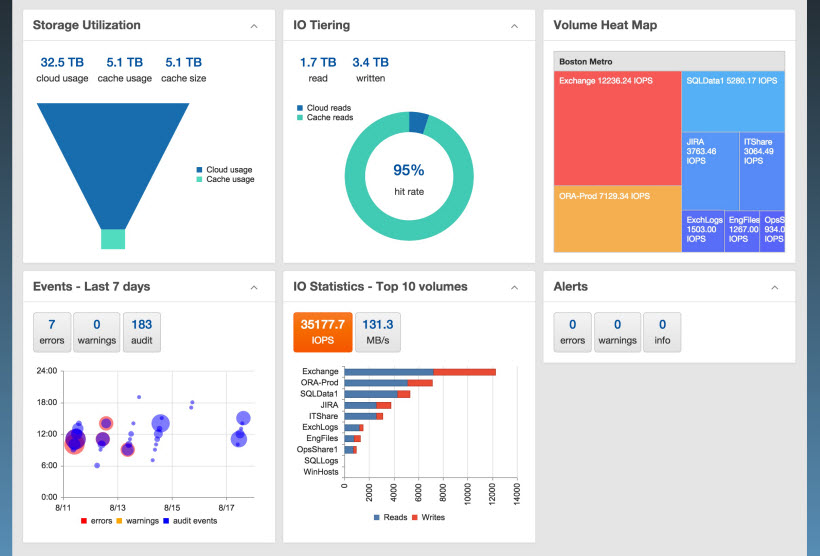
ClearSky tackles that problem by partnering with co-location providers for local facilities to host its own equipment. It then ties into the cloud provider’s backend through the availability zone (such as Amazon East). A proprietary edge cache the company calls Smart Tiered Caching analyzes customer data to determine relative importance and shuffles the most critical blocks of data to the edge of the network. So-called “hot” data is cached locally with a dedicated private line to the source.
As a result, “We’re delivering a multi-tenant, pay-as-you-go service that moves data around to the places it needs to be across our architecture so it feels local to the customer,” Rubin said. “That’s very hard.” Backup and disaster recovery are built in.
Customers can map to the storage target in the same way that they would a traditional SAN or NAS device. Rubin said ClearSky is “deeply integrated with VMware to make migration easy for those customers.” The services uses VMware, Inc.’s vSphere Virtual Volumes to enable users to set storage policies, provision and add capacity on-demand, and access system alerts and updates at any time.
Pricing is based upon the amount of data loaded into the service. Rubin declined to provide specifics but said the total cost of ownership is about one-third that of a traditional array when combined with backup and redundant equipment.
The company is initially rolling out it service in Boston, Philadelphia and Las Vegas with SLA support for customers within a 150-mile radius. Over the next year it plans to add most of the major metropolitan areas and expand outside North America in 2016.
Rubin said ClearSky has raised $12 million from investors that include General Catalyst Partners and Highland Capital Partners.
… We’d like to tell you about our mission and how you can help us fulfill it. SiliconANGLE Media Inc.’s business model is based on the intrinsic value of the content, not advertising. Unlike many online publications, we don’t have a paywall or run banner advertising, because we want to keep our journalism open, without influence or the need to chase traffic.The journalism, reporting and commentary on SiliconANGLE — along with live, unscripted video from our Silicon Valley studio and globe-trotting video teams at theCUBE — take a lot of hard work, time and money. Keeping the quality high requires the support of sponsors who are aligned with our vision of ad-free journalism content.
If you like the reporting, video interviews and other ad-free content here, please take a moment to check out a sample of the video content supported by our sponsors, tweet your support, and keep coming back to SiliconANGLE.






