



 NEWS
NEWS
NEWS
NEWS
NEWS

While there are still plenty of indie developers bootstrapping their way to release, there has been a growing trend over the last few years of crowdfunded games with budgets ranging from a few thousand dollars to tens of millions of dollars and everything in between.
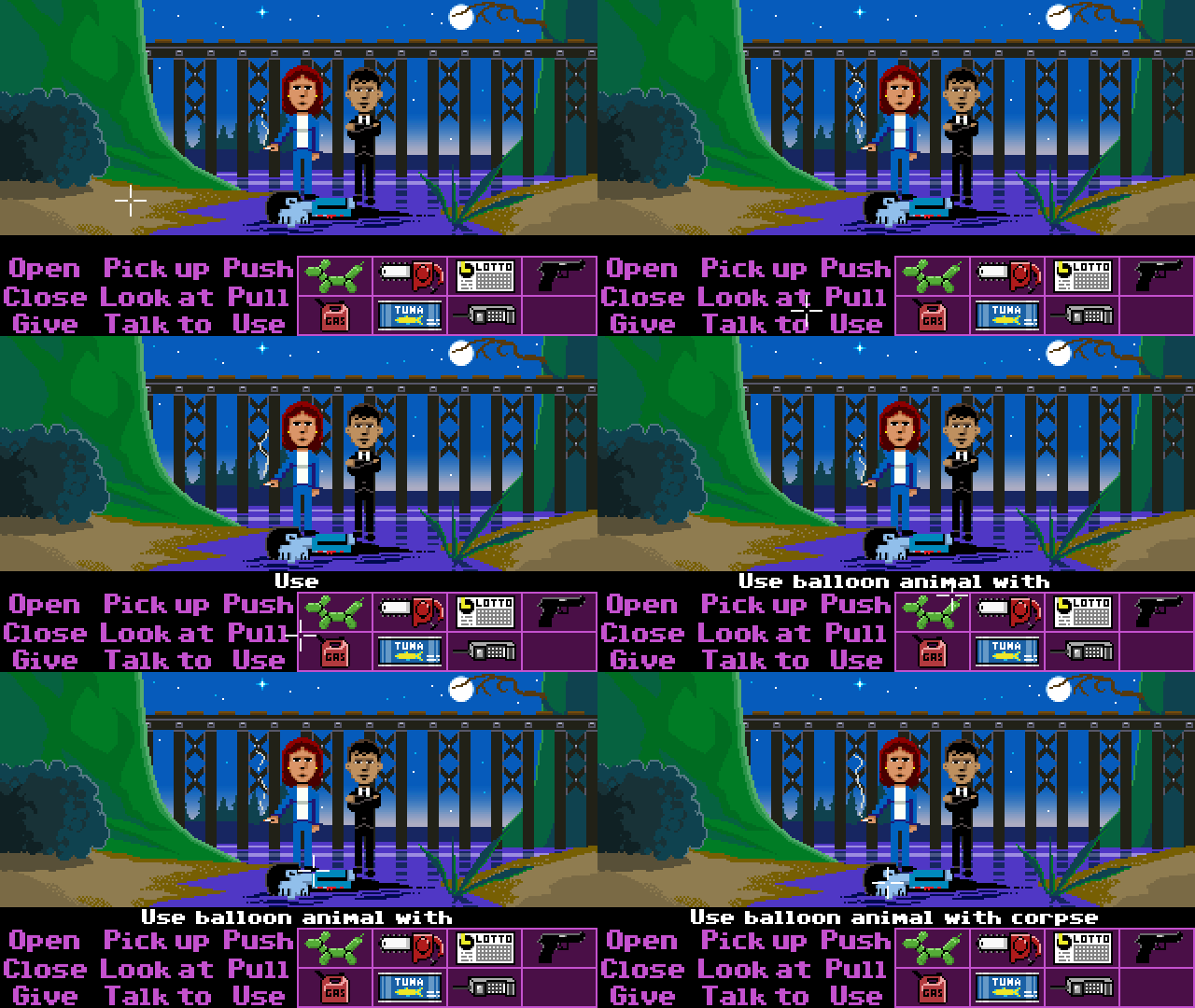
Former LucasArts veteran Ron Gilbert, who worked on classic point-and-click games like Maniac Mansion and The Secret of Monkey Island, says that it can be easy for these well-funded indie developers to let those dollar signs go to their heads, but nothing lasts forever.
“If we didn’t worry about money everyday, we would run out of money. It sneaks up on you,” Gilbert wrote in a blog post for his upcoming crowdfunded game, Thimbleweed Park (via Eurogamer). “Seeing $500,000 in your bank account can make you cocky. It can seem like an endless supply of cash and more money than most people (including me) have ever seen in their bank account. But you have to treat that $500,000 like it’s $5,000 or even $500. Every dollar matters.”
Gilbert explained that it is usually the publisher’s job to keep developers on budget, but indie devs are essentially their own bosses and have to keep themselves on track.
“We had budgets back at Lucasfilm, but we were very isolated from the gory ramifications of those numbers,” Gilbert said. “I could make a budget and if I went over by 20%, I might get a stern talking to, but it’s not like people weren’t going to be paid. When you’re running your own company and project with your own money and you run out, people don’t get paid and they don’t like that. In the real world, they stop working.”
Gilbert said that his own process involves creating a detailed budget before he even starts designing the game. Knowing what he can afford allows him to determine the scope of the project, including how many developers he can afford to pay and for how long.
“One thing to note, and I’m sure it will raise some eyebrows, is the monthly burn rate [on our budget],” Gilbert said. “That’s a lot of money to spend each month. No one line item is very large, but they add up and can catch you by surprise. This is a pretty barebones project (but not scrappy) and it still costs $20K-$30K a month. It why when I look at other Kickstarters asking for very little money and they have a three page long team list, I get skeptical.”
… We’d like to tell you about our mission and how you can help us fulfill it. SiliconANGLE Media Inc.’s business model is based on the intrinsic value of the content, not advertising. Unlike many online publications, we don’t have a paywall or run banner advertising, because we want to keep our journalism open, without influence or the need to chase traffic.The journalism, reporting and commentary on SiliconANGLE — along with live, unscripted video from our Silicon Valley studio and globe-trotting video teams at theCUBE — take a lot of hard work, time and money. Keeping the quality high requires the support of sponsors who are aligned with our vision of ad-free journalism content.
If you like the reporting, video interviews and other ad-free content here, please take a moment to check out a sample of the video content supported by our sponsors, tweet your support, and keep coming back to SiliconANGLE.






