



 NEWS
NEWS
NEWS
NEWS
NEWS

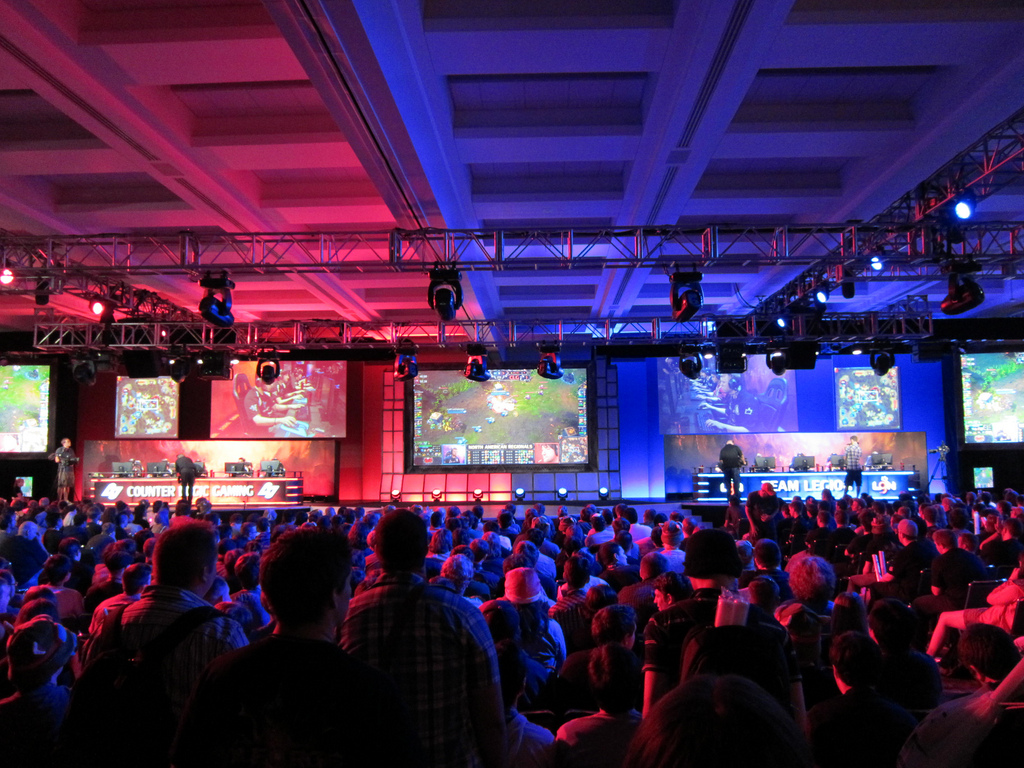
Esports has grown by leaps and bounds over the last few years, with millions of fans watching and attending professional game tournaments around the world. Now market research firm Newzoo BV says the industry could reach over $1 billion in value by 2020, provided it can take advantage of five key factors that affect the growth of the market.
While eSports is already a huge industry, it is made up of a very short list of popular games, several of which fall into the mobile battle arena (MOBA) genre, including League of Legends, Dota 2, and Heroes of the Storm. Newzoo said that to avoid a plateau in popularity, eSports may need to diversify into more game types that can pull in new fans that might not be interested in the industry’s current offerings.
“… with their complex game play, MOBA games can be difficult for viewers who don’t play them to understand and for gamers to master,” Newzoo said. “Would more accessible game genres and segments gain a wider audience and player base?”
Newzoo noted that Valve Software’s Counter-Strike: Global Offensive, which is a first-person shooter, passed even League of Legends for the most hours watched on Twitch for one day, proving that non-MOBAs can still pull in eSports viewers.
Another potential limit on the growth of eSports is a lack of localized content. Newzoo explained that unlike traditional sports, eSports generally does not have regional or national teams that represent specific segments of fans.
“While on a global level, esports has received a lot of attention from mainstream media, locally, many tournament organizers still struggle to find parties willing to participate in setting up events,” Newzoo said. “Publishers will have to play a role in connecting local esports activities with the larger regional and global championships.”
According to Newzoo, only Riot Games’ League of Legends comes close to the hierarchy model of traditional sports, with layered tiers of local and international leagues.
One challenge that has recently made headline in the eSports industry is the difficulty of regulating professional matches. Earlier this year, the Electronic Sports League (ESL) was forced to institute a drug testing policy after one player admitted that he and his team used the prescription stimulant Adderall during tournaments.
There have also been several examples of match fixing and other forms of cheating, and there has even been one example of extortion when a team manager threatened to have a player’s mother evicted from her home if he did not participate in a tournament.
As the value of the industry rises, so do the stakes for the companies and organizations involved, and regulation is becoming an increasingly important aspect of eSports. Newzoo noted that “esports is a nonconformist world that may find it difficult to accept strict regulations and authority.”
Another major difference between eSports and traditional sports is how the rights to media from events are controlled. In some ways, these differences are part of what has helped the industry grow.
While professional sports organizations like the National Football League (NFL) or Major League Baseball (MLB) strictly control who can show their content, the eSports industry’s content rights are much more nebulous. Newzoo admitted that loose restrictions may have helped the industry initially, but that may need to change in order for it to continue growing.
“Thus far, content rights have not really been a focus for publishers, as fan-generated content has served as free advertising for their games,” Newzoo said. “… [However] local and global media rights for esports are unclear and limit the entry of competitive gaming into traditional media and the amount of money potentially connected to it.”
Esports have enjoyed enormous success on digital platforms, especially popular livestreaming site Twitch.tv, but Newzoo noted that gaming is only now starting to break through to traditional media outlets like television.
For example, Turner Broadcasting recently announced that it would be forming a Counter Strike: Global Offensive league that will air professional matches on TBS, and ESPN has previously aired competitions in Heroes of the Storm and Dota 2.
“Many brands are still reluctant to associate themselves with esports, as prejudices against competitive gaming still abound,” Newzoo said. “These prejudices are often related to the esports audience demographic and the definition of ‘quality content.’ ”
You can read Newzoo’s full report here.
… We’d like to tell you about our mission and how you can help us fulfill it. SiliconANGLE Media Inc.’s business model is based on the intrinsic value of the content, not advertising. Unlike many online publications, we don’t have a paywall or run banner advertising, because we want to keep our journalism open, without influence or the need to chase traffic.The journalism, reporting and commentary on SiliconANGLE — along with live, unscripted video from our Silicon Valley studio and globe-trotting video teams at theCUBE — take a lot of hard work, time and money. Keeping the quality high requires the support of sponsors who are aligned with our vision of ad-free journalism content.
If you like the reporting, video interviews and other ad-free content here, please take a moment to check out a sample of the video content supported by our sponsors, tweet your support, and keep coming back to SiliconANGLE.






