






Integrating Big Data technology and research into healthcare is an exciting field, and the partnership between EMC and Partners HealthCare is an example of important innovations.
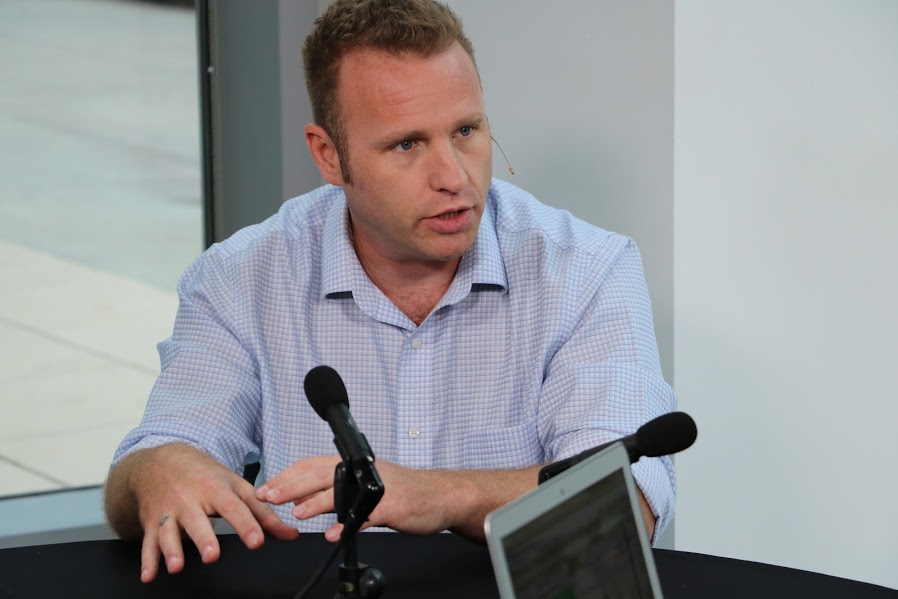
At BigDataNYC 2015, Jon Jackson, scientific computing services manager at Partners HealthCare, and Chris Harrold, global field CTO of Big Data solutions at EMC, talked with with John Furrier, host of theCUBE, from the SiliconANGLE Media team.
“People are coming to us with all kinds of interesting projects, and they’ve been hitting the limits of performance in kind of the traditional [large machines],” said Jackson. “They are wanting an analytics platform that can scale not just to 5,000 records but to a million records.”
These Big Data technologies can really facilitate data on a massive scale and bring information into one place.
“We understand the value that Big Data needs to happen,”said Harrold. “We get that. We need it to be faster, we need it to be simpler, and we need it to be secured.”
EMC has gotten out in front of the Big Data wave with a solution set and products to enable the massive-scale storage and compute. What EMC is really focused on now is wrapping that out into a platform that can be managed in a governed way. Although the Big Data world seems like the Wild West right now, EMC is “really trying to tame that in with a set of solutions,” added Harrold.
One of the topics Jackson and Harrold touched on was machine learning and systems of intelligence.
“A concept that gets thrown around is clinical decision support,” noted Jackson. “So we don’t see the machines as replacing the doctor — but to be able to pass a whole lot of information and give color to all the various options available using all the records going back has tremendous value.” Reducing the amount of time it takes to process information and predict what a patient needs could make care more streamlined.
Not to say that humans can ever be replaced, though. “It is a feedback loop. When we talk about Internet of Things, the connotation of ‘thing’ is a watch, or a sensor in a car, or a pacemaker monitor, or something else,” said Harrold. “But we’re things. We create our own sets of data as well.”
Interactions with patients and a doctor is real-time data. So new information learned by doctors will need to be known instantaneously within the database dashboard or the flow of treatment could be invalidated.
Watch the full video interview below, and be sure to check out more of SiliconANGLE and theCUBE’s coverage of BigDataNYC 2015.
Support our mission to keep content open and free by engaging with theCUBE community. Join theCUBE’s Alumni Trust Network, where technology leaders connect, share intelligence and create opportunities.
Founded by tech visionaries John Furrier and Dave Vellante, SiliconANGLE Media has built a dynamic ecosystem of industry-leading digital media brands that reach 15+ million elite tech professionals. Our new proprietary theCUBE AI Video Cloud is breaking ground in audience interaction, leveraging theCUBEai.com neural network to help technology companies make data-driven decisions and stay at the forefront of industry conversations.





