



 NEWS
NEWS
NEWS
NEWS
NEWS

Fresh from a $3 million Series A funding round, Israeli analytics startup Anodot, Inc. exits stealth today with a real-time analytics engine focused on anomaly detection. The system uses patented machine learning algorithms to deliver what it claims is unparalleled ease-of-use and rapid response when finding data patterns that deviate from the expected norms.
The Ra’anana, Israel-based company features an impressive executive team, including CEO David Drai (@dave_drai), who co-founded Cotendo Inc., a content–delivery network that was acquired by Akamai Technologies Inc. in 2012 for $300 million. The company’s chief data scientist is Ira Cohen, who was formerly chief data scientist at HP Software.
Anomaly detection is a specialty area of analytics that focuses on sifting through large amounts of streaming data and looking for outliers. It’s used in disciplines like systems management, computer security and e-retailing to spot anomalies that may indicate problems or opportunities. For example, a sudden drop-off in e-commerce activity in a particular geographic region may indicate failure of a server or a credit card processing engine.
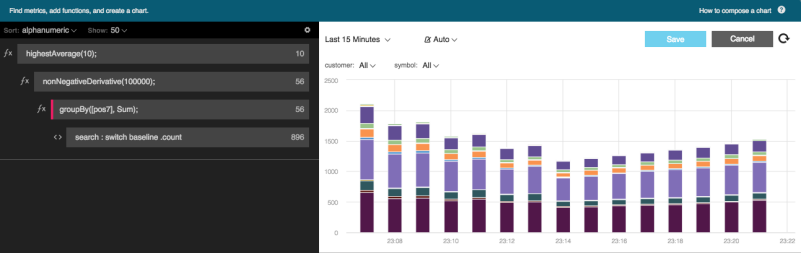
Anodot goes beyond anomaly detection to correlate patterns using machine learning and identify probable causes. It uses a scoring algorithm to rank anomalies by frequency or severity and surface the most important events. The engine works with standard data formats like Graphite, StatsD, Coda Hale Metrics and collectd, which are used to gather and display real-time data. It also has a Rest API that can accept data in the flexible JSON format.
Users can express queries in simple terms such as “show me anomalies in Berlin” and then click through the resulting report to drill down to root causes. “It’s zero touch. You don’t need to configure things,” Drai said.
Anodot is initially aiming its product at the advertising technology, Internet of Things and e-commerce markets, which deal with large amounts of data and demand split-second decision-making. Its reference customers include website development platform Wix.com Inc., online support service LivePerson Inc. and content marketing and discovery company Outbrain Inc.
The company recently opened an office in Sunnyvale, CA and has hired three U.S. salespeople. Asked what differentiates his technology from the dozens of other startups chasing similar opportunities, Drai said, simply, “it works and we have customers.”
The company has a tiered pricing model based on the number of metrics tracked, with tiers of $3,000, $5,000 and $10,000 per month. There’s a free one-month trial on its website.
… We’d like to tell you about our mission and how you can help us fulfill it. SiliconANGLE Media Inc.’s business model is based on the intrinsic value of the content, not advertising. Unlike many online publications, we don’t have a paywall or run banner advertising, because we want to keep our journalism open, without influence or the need to chase traffic.The journalism, reporting and commentary on SiliconANGLE — along with live, unscripted video from our Silicon Valley studio and globe-trotting video teams at theCUBE — take a lot of hard work, time and money. Keeping the quality high requires the support of sponsors who are aligned with our vision of ad-free journalism content.
If you like the reporting, video interviews and other ad-free content here, please take a moment to check out a sample of the video content supported by our sponsors, tweet your support, and keep coming back to SiliconANGLE.






