



 NEWS
NEWS
NEWS
NEWS
NEWS

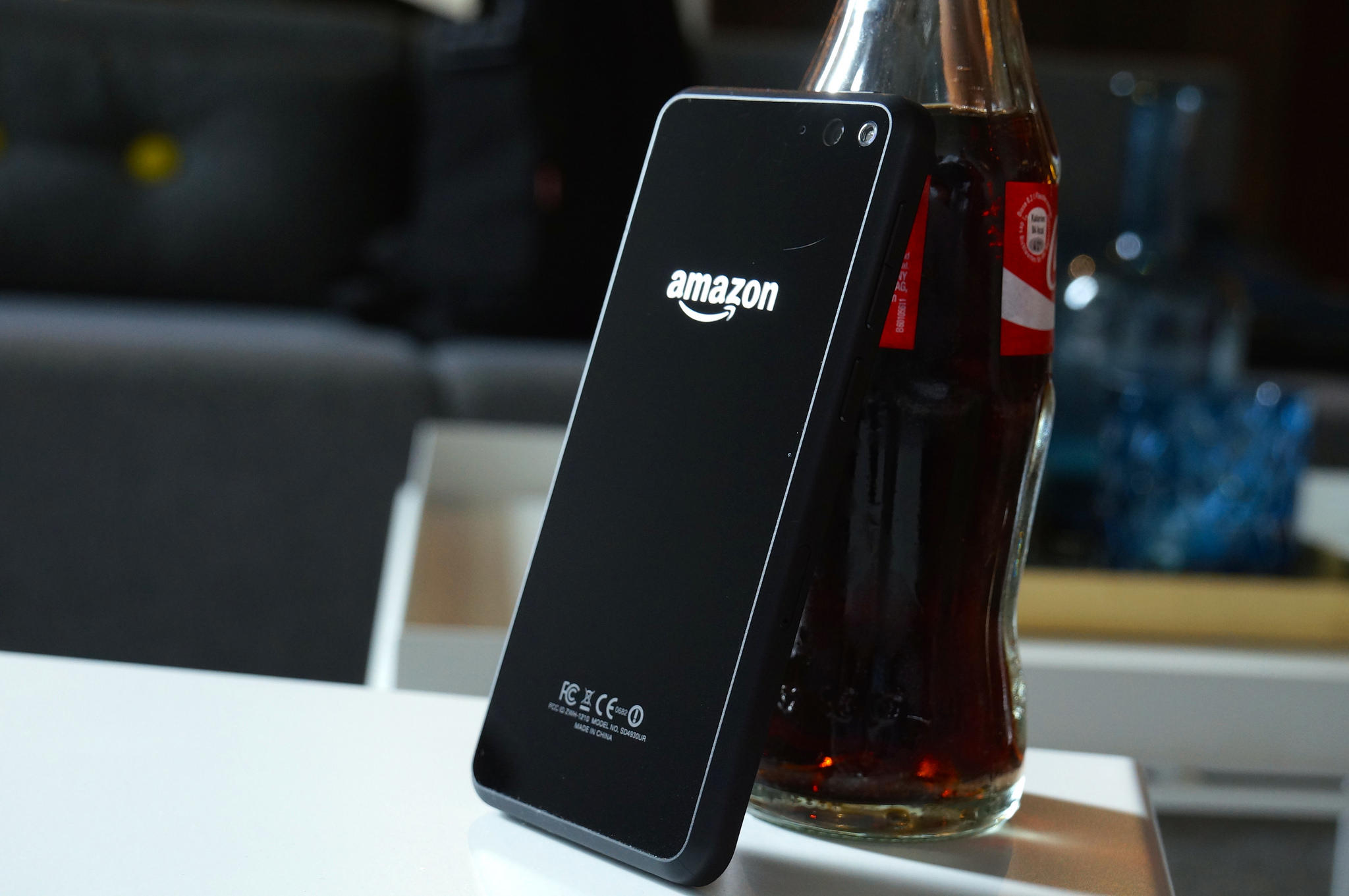
Despite the failure of its Fire phone, Amazon.com, Inc. still wants a slice of the phone market and is attempting to get Original Equipment Manufacturers (OEMs) to deeply integrate its services into handsets.
According to The Information (subscription only), Amazon has discussed working with phone brands at a “factory level” to integrate its services with devices in a deeper way than simply preloading apps.
The company is said “to want partners’ phones to resemble Amazon’s line of Kindle Fire tablets that it builds on its own,” the report claims, with the phones offering a full range of Amazon services including access to Amazon Prime.
This could mean one of two things: Amazon apps being installed on Android phones as a replacement to Google services (note some Amazon apps are already preloaded onto some devices) or the more likely scenario, given the wording, of Amazon’s Android fork, currently used on its range of Kindle devices and previously with the Fire phone, coming installed in place of the core build of Android itself.
“This would help Amazon gain a measure of influence over Android smartphone software, which is owned by a competitor, Google,” the report notes.
While Amazon’s desire to have its services baked into phones is purely understandable from a business perspective, it’s also highly unlikely to ever happen given the way Google currently licenses Android handset manufacturers.
Most people would know that Android is open source, and hence anyone is free to use it, as indeed Amazon does as the base code for its own operating system. However, Google has rules in place that restrict a manufacturer from including proprietary Google apps, such as the Play Store, Gmail, Maps, Docs, YouTube, and others if they include competing services, such as the Amazon App Store, on the device.
There is also an “anti-fragmentation” clause, according to Ars Technica, which states that if a company wants access to Google Play, it must ship Google services on every Android device it sells, meaning that if the manufacturer were to ship any phone with a non-Google Android fork it would be kicked out of the Google ecosystem and would not be able to offer Google services on all of its devices, including those which ship with the original version of Android.
The only chance Amazon has of finding an OEM partner may be with a minor Chinese manufacturer who doesn’t currently sell its phones outside of the Middle Kingdom and hence doesn’t care about Google applications (many of which are blocked there anyway) and is looking for something different, or an angle, to expand its business into the West. That said, given the failure of the Fire phone, it would be a hard sell unless the offering was at the very lower end of the market.
… We’d like to tell you about our mission and how you can help us fulfill it. SiliconANGLE Media Inc.’s business model is based on the intrinsic value of the content, not advertising. Unlike many online publications, we don’t have a paywall or run banner advertising, because we want to keep our journalism open, without influence or the need to chase traffic.The journalism, reporting and commentary on SiliconANGLE — along with live, unscripted video from our Silicon Valley studio and globe-trotting video teams at theCUBE — take a lot of hard work, time and money. Keeping the quality high requires the support of sponsors who are aligned with our vision of ad-free journalism content.
If you like the reporting, video interviews and other ad-free content here, please take a moment to check out a sample of the video content supported by our sponsors, tweet your support, and keep coming back to SiliconANGLE.






