



 NEWS
NEWS
NEWS
NEWS
NEWS

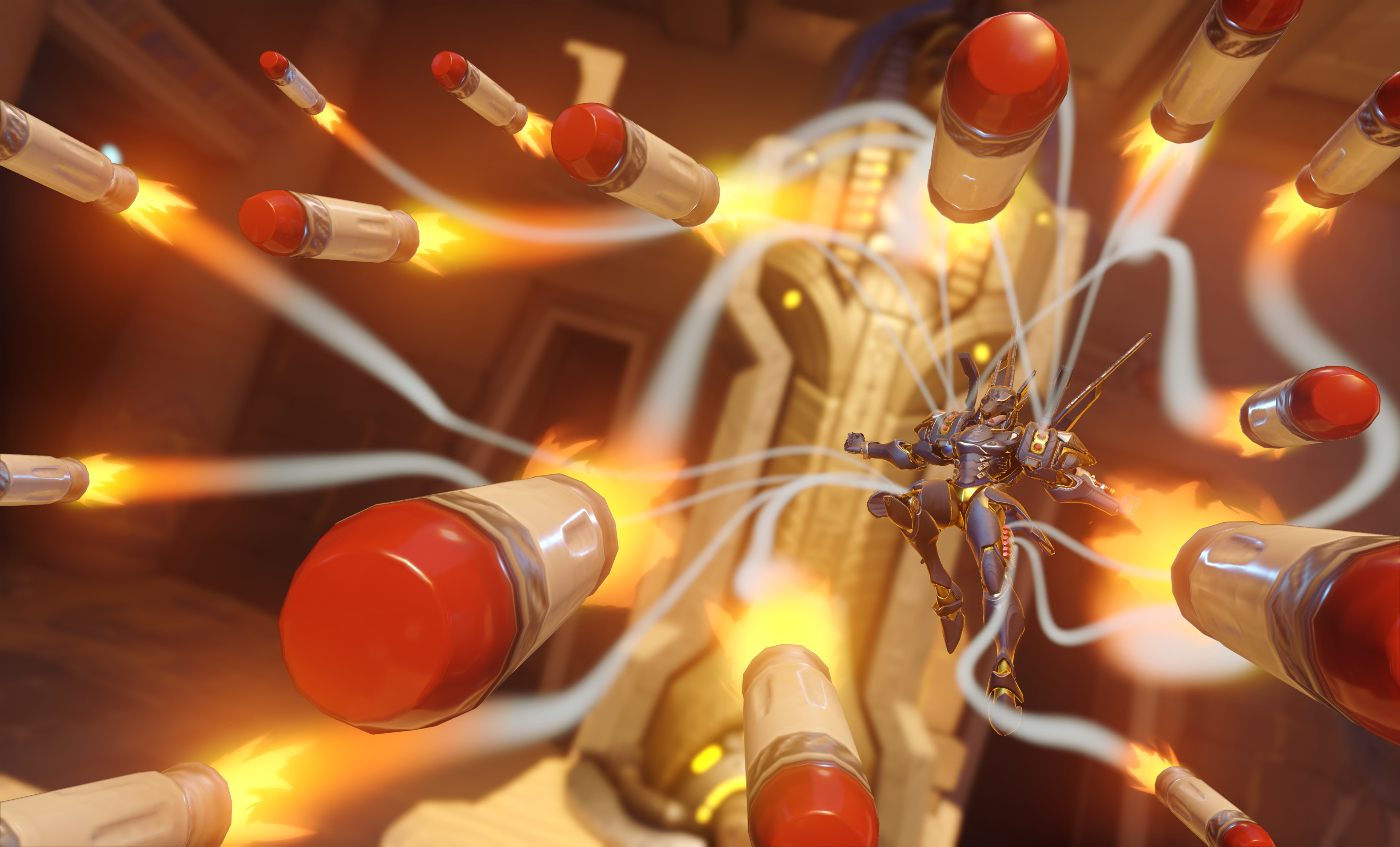
This week, Blizzard Entertainment introduced a new Competitive Play mode to the closed beta of its upcoming team shooter, Overwatch, finally allowing the game to enjoy some of the same player toxicity as games like League of Legends and Dota 2.
Competitive Play takes place on the same maps as the standard Quick Play, but there are a few important differences between how the two work.
First, players must stay for the full match to receive credit, meaning that on Payload or Point Capture maps, players must stay for both the Attack and Defense phases. This also means that a team is only awarded a victory if it wins both phases or if it wins a final Sudden Death match. For Control maps, a team must win 3 out of 5 rounds for a victory rather than the 2 of 3 needed in Quick Play.
Because of these requirements, a Competitive Play match will typically take more time than a Quick Play match.
Another key difference, and this has been the source a fair share of player rage, is the fact that teammates who leave during a match in Competitive Play are not replaced, so if one or two people quit during a game, it becomes nearly impossible to succeed. If those players simply lost their connection or suffered from a game crash, they can still reconnect if they are quick, but no new players will be able to join a match once it is in progress.
Competitive Play is divided into four tiers: Challenger, Advanced, Expert, and Master. Each of these tiers is further divided into five divisions, ranked 1 through 5.
In most divisions, players earn 20 points for each victory and lose 20 points for each defeat, and 100 points are required to advance to the next rank. The Challenger tier, which is the lowest in the ranking system, does not take away points for losses, and the Advanced and Expert tiers take away only 10 points if the match was lost during tiebreaker. Consecutive wins also award double points in all but the top tier.
Obviously, this point system means that losses are taken a bit more seriously in Competitive Play, and there has been no shortage of toxicity from players who believe that a loss is everyone’s fault but theirs.
Fortunately, you can avoid that by joining Competitive Play as a group, but you also have the option of selecting players to avoid by right-clicking their name in the social menu and selecting “Avoid this player.” This will make it less likely that you will be matched up in the future. You can also report particularly nasty players.
Currently, each Competitive Play season lasts only one month, but this decision has been met with some criticism from many players, who feel that this timeframe is too short. The official release for Overwatch is still over a month away, however, so Blizzard could still decide to change the length of the season before launch.
… We’d like to tell you about our mission and how you can help us fulfill it. SiliconANGLE Media Inc.’s business model is based on the intrinsic value of the content, not advertising. Unlike many online publications, we don’t have a paywall or run banner advertising, because we want to keep our journalism open, without influence or the need to chase traffic.The journalism, reporting and commentary on SiliconANGLE — along with live, unscripted video from our Silicon Valley studio and globe-trotting video teams at theCUBE — take a lot of hard work, time and money. Keeping the quality high requires the support of sponsors who are aligned with our vision of ad-free journalism content.
If you like the reporting, video interviews and other ad-free content here, please take a moment to check out a sample of the video content supported by our sponsors, tweet your support, and keep coming back to SiliconANGLE.






