



 NEWS
NEWS
NEWS
NEWS
NEWS

As Big Data is diverted from static data lakes and put into motion, there have been promises of all-in-one solutions — unified architecture for all aspects of Big Data management. Andrea Capodicasa, head of Big Data analytics at Capgemini, sees these promises as “ivory towers” and believes that a single view cannot be achieved by a single architecture. In his opinion, what is needed is to enable businesses to leverage all technologies to their best advantage through a powerful “data archipelago” comprised of interconnected, flexible technologies.
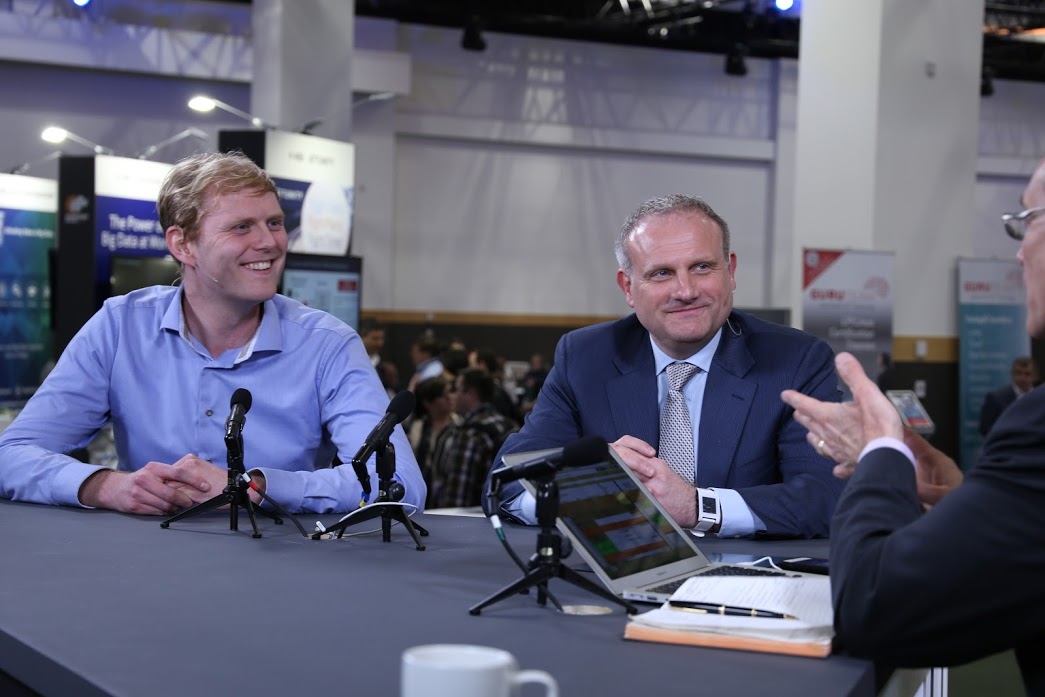
Capodicasa, and his colleague Hessel Miedema, machine learning architect at Capgemini, meet with Dave Vellante (@dvellante), cohost of theCUBE, from the SiliconANGLE Media team, during Hadoop Summit in Dublin, Ireland. The trio discussed how, as Big Data architects, Capidocasa and Miedema are using the combination of “big brains and client contact” to aid Capgemini clients to take the best advantage of the shift in Big Data from static to dynamic.
Miedema responded to Vellante’s question by describing the evolution of the Big Data architect’s role from purely technical just a few years ago to their current focus on establishing business transformation and enabling clients to leverage information. Capodicasa agreed, saying that their role is now 60–80 percent advisory, with a focus on strategy rather than technical implementation.
Vellante asked if Capgemini customers are modernizing their Big Data systems because of the huge ROI or if they are choosing to modernize because of organizational pressure. Miedema answered that it “depends who you talk to.” The business analysts are just interested in accessing and using the data, but from the IT department’s POV, security, compliance and regulations are of primary importance.
The goal is to align everyone’s interests, he said, describing how Capgemini’s biggest success stories come when they gave data scientists, business analysts and data users all working and collaborating together in a physically close environment to fulfill both ROI and security needs.
Real-life example of ROI are in fraud analytics, said Miedema, describing how it is “now easy with the technology available to find the patterns.” Another example is Predictive Hazard Management where the obvious benefit to the bottom line is the ability to maintain extremely expensive equipment before it breaks.
Winding up the interview, Miedema and Capodicasa talked about the benefits of working with a global organization with a focus on Big Data and analytics, such as Capgemini. “Big Data is a global problem, so you have to have that global mindset,” said Miedema.
Watch the full interview below, and be sure to check out more of SiliconANGLE and theCUBE’s coverage of Hadoop Summit 2016 – Dublin. And make sure to join in during theCUBE’s live coverage during the event by joining in on CrowdChat.
… We’d like to tell you about our mission and how you can help us fulfill it. SiliconANGLE Media Inc.’s business model is based on the intrinsic value of the content, not advertising. Unlike many online publications, we don’t have a paywall or run banner advertising, because we want to keep our journalism open, without influence or the need to chase traffic.The journalism, reporting and commentary on SiliconANGLE — along with live, unscripted video from our Silicon Valley studio and globe-trotting video teams at theCUBE — take a lot of hard work, time and money. Keeping the quality high requires the support of sponsors who are aligned with our vision of ad-free journalism content.
If you like the reporting, video interviews and other ad-free content here, please take a moment to check out a sample of the video content supported by our sponsors, tweet your support, and keep coming back to SiliconANGLE.






