



 NEWS
NEWS
NEWS
NEWS
NEWS

Last month at the National Association of Broadcasters (NAB) 2016 conference, TVU Networks, a market leading telecommunications equipment supplier for broadcast media, demonstrated mobile transmission of virtual reality (VR) media over IP. With this technology, TVU expects to deliver the equipment needed to make live broadcast of VR content for wide scale adoption.
While video delivery is just catching onto 360 video and VR—such as YouTube and Facebook—there will be a powerful market need for the equipment to allow broadcasters to send live VR content from the venue itself. This is even happening right now with a deal between Live Nation, Inc. and NextVR, Inc. to live stream rock concerts.
TVU Networks boasts a proud history of developing and supplying multiple generations of live mobile IP news gathering transmitters for video over IP with the TVU One. TVU One features the Inverse Statmux Plus (IS+) transmission algorithm, Smart VBR technology, and the TVU264 video codec. For increased mobility the TVU One can also include embedded modems, transmit simultaneously over multiple networks including cellular, microwave, MIMO microwave mesh, Ka-band and Ku-band satellite, BGAN, WiFi, and Ethernet.
The result of all this technology: broadcasters have in the TVU VR a solution to deploy a VR camera—such as Nokia Corp’s OZO—and broadcast live for video playback in current market headsets such as the Oculus Rift or HTC Vive.
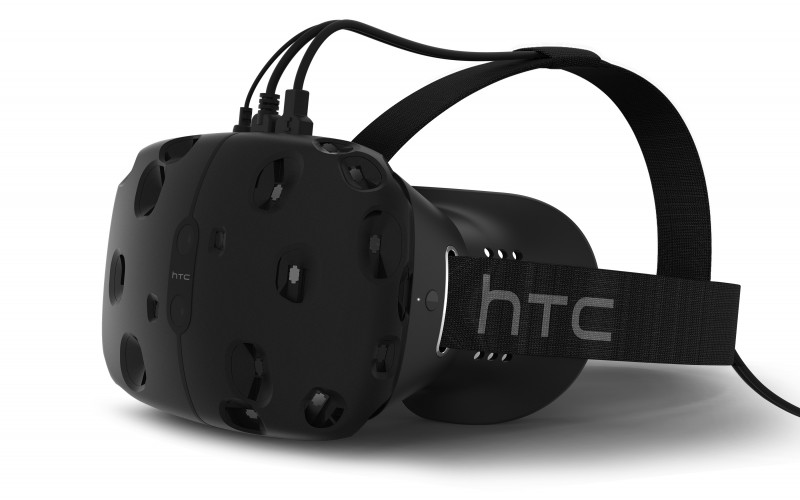
Photo Credit: HTC Vive, courtesy of Valve Corporation
In an interview with SiliconANGLE, Paul Shen, CEO of TVU Networks, said that VR is supported heavily by content creators.
“Broadcast went through a huge hype for 3D—but look at what happened to 3D,” Shen said, mentioning that like 3D, VR offers a totally different mechanism for perception. “One difference between 3D hype and VR hype: where 3D hype was pushed by equipment manufacturers, VR hype is being pushed by content creators—such as games, social, movie makers, etc.”
This “totally different mechanism for perception,” as Shen calls it, means that instead of bringing the action to viewers (as TV does) broadcasters can bring the viewers into the action. For example, a race car outfitted with a VR camera can put the viewer inside the car with a 360 view (sight and sound)—where a viewer can simply turn his or her head to get a different angle of view.
Shen said that about 65 percent of TVU’s customers are from the U.S. and that a majority of the company’s customers are content creators. These content creators have been seeking a broadcast solution that permits VR over IP and TVU enable that market interest.
Market researcher Trendforce said in December 2015 that the VR market would reach $70 billion by 2020.
The Oculus Rift shipped May 28, 2016 and the HTC Vive began shipping on April 5, 2016. Already VR apps have begun to proliferate, looking through Valve Corporation’s Steam VR marketplace reveals 194 apps already published that support those two headsets. Sony Corporation’s own VR goggle offering, the PlayStation VR, is slated to ship in October 2016.
With this market slowly expanding and interest in headsets and apps clearly visible, the first live VR broadcasts will need equipment to support them. Racing may be the example given above, but many sports (from football to tennis) would benefit from the immersive nature of VR. Virtual reality cameras could put viewers into the middle of rock concerts (making them feel like a part of the crowd–for more on this see what LiveVR is doing). The opportunities for news broadcast are equally interesting.
… We’d like to tell you about our mission and how you can help us fulfill it. SiliconANGLE Media Inc.’s business model is based on the intrinsic value of the content, not advertising. Unlike many online publications, we don’t have a paywall or run banner advertising, because we want to keep our journalism open, without influence or the need to chase traffic.The journalism, reporting and commentary on SiliconANGLE — along with live, unscripted video from our Silicon Valley studio and globe-trotting video teams at theCUBE — take a lot of hard work, time and money. Keeping the quality high requires the support of sponsors who are aligned with our vision of ad-free journalism content.
If you like the reporting, video interviews and other ad-free content here, please take a moment to check out a sample of the video content supported by our sponsors, tweet your support, and keep coming back to SiliconANGLE.






